
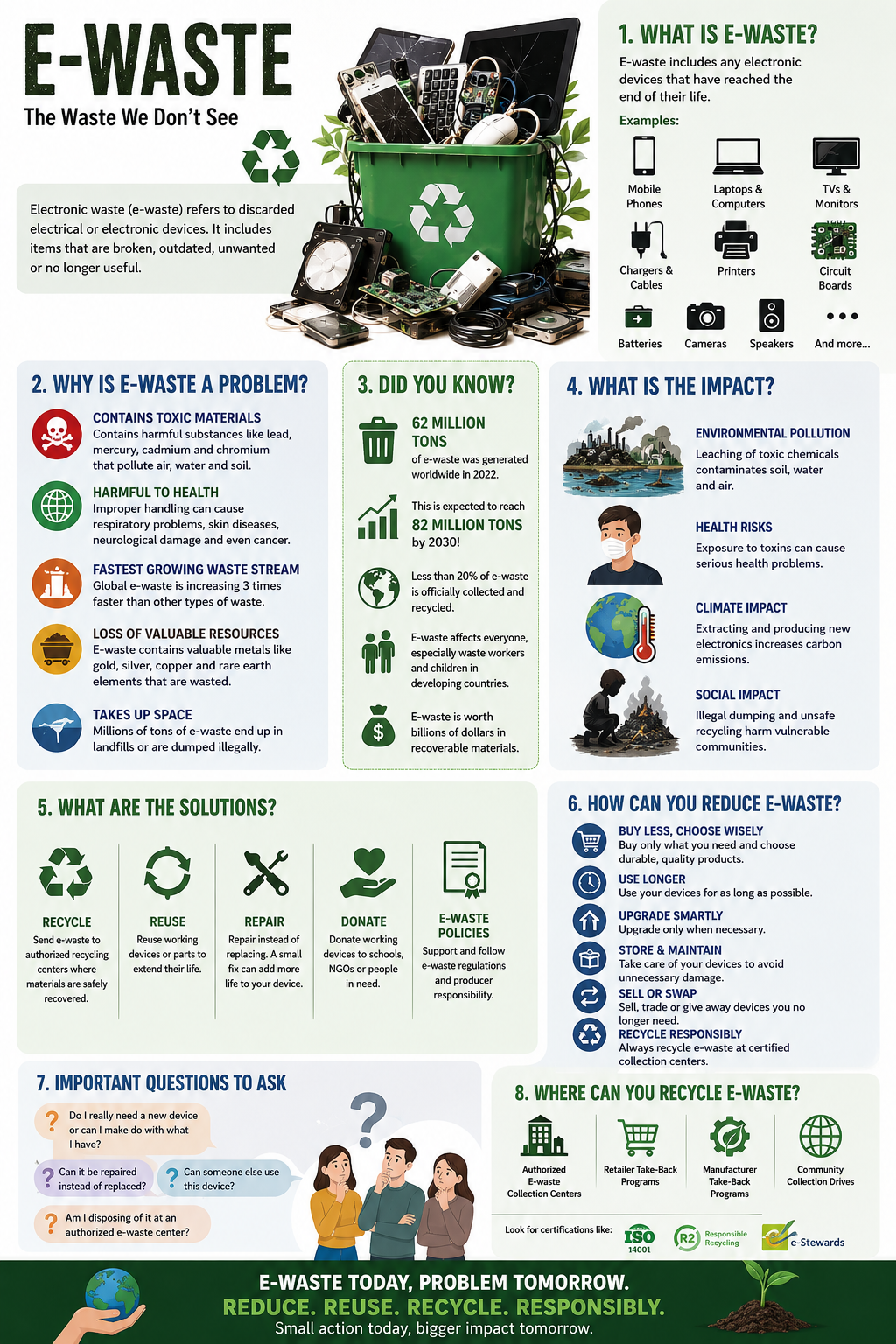
Unlike ordinary waste, e-waste is not just useless garbage. Inside every broken phone or outdated computer are chemicals and metals that can harm nature if not handled properly. When electronic waste is dumped in open areas or burned carelessly, poisonous substances mix with the soil, water, and air. This pollution slowly damages the environment and even affects human health by causing breathing problems and other illnesses.
The rise of e-waste reflects modern human habits. Many people replace gadgets not because they stop working, but because newer models look more attractive or have advanced features. As a result, perfectly repairable devices are often forgotten in drawers or thrown away within a few years. In this race for “new,” old electronics silently pile up into huge mountains of waste.
However, e-waste is not a problem without a solution. A small change in daily habits can make a big difference. Repairing devices instead of replacing them, donating old electronics, and using certified recycling centres can reduce the amount of waste greatly. Companies can also help by designing products that last longer and are easier to recycle.
Awareness is equally important. Many people still do not know that careless disposal of electronics harms the environment. Schools, social media campaigns, and community drives can educate people about safe e-waste management and encourage responsible behaviour.
Technology is meant to improve human life, not damage the planet. If society learns to use electronics wisely and dispose of them responsibly, the growing problem of e-waste can be controlled. Protecting the Earth does not always require big actions; sometimes, it begins with something as simple as not throwing away an old phone carelessly.