
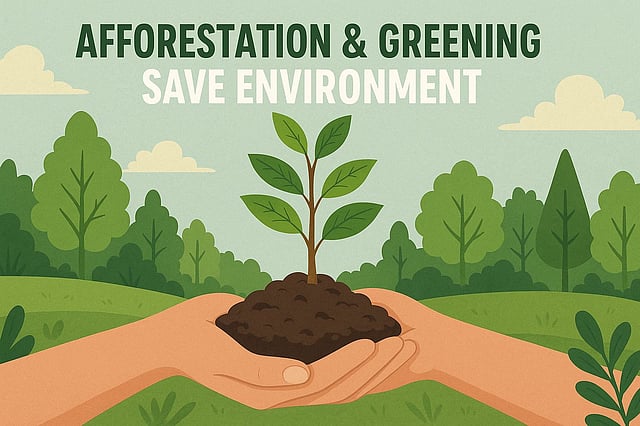
Afforestation refers to the practice of planting trees on barren, degraded, or non-forest land to create new forest cover. In today’s world, where rapid urbanization and industrialization have led to large-scale deforestation, afforestation has become a vital need rather than a choice. Trees are not just a part of nature’s beauty; they are essential for the survival of all living beings.
One of the greatest benefits of afforestation is environmental protection. Trees absorb carbon dioxide and release oxygen, thereby reducing air pollution and controlling global warming. They help maintain the balance of gases in the atmosphere and act as natural air purifiers. Forests also play a crucial role in regulating climate by influencing rainfall patterns and reducing extreme temperatures.
Afforestation is equally important for soil and water conservation. Tree roots bind the soil, preventing soil erosion and landslides. Forest cover improves soil fertility by adding organic matter and helps recharge groundwater levels. Moreover, trees reduce surface runoff and the risk of floods by absorbing rainwater.
Another significant importance of afforestation lies in preserving biodiversity. Forests provide shelter and food to a wide variety of plants, animals, birds, and insects. By creating new forest areas, afforestation helps protect endangered species and maintains ecological balance.
Afforestation also has social and economic benefits. Forests provide resources such as timber, fruits, medicines, and fuel, supporting the livelihood of many communities. Green surroundings improve mental health, provide recreational spaces, and enhance the overall quality of life. In rural areas, afforestation can create employment opportunities and promote sustainable development.
In conclusion, afforestation is a powerful tool to combat environmental degradation and ensure a healthier planet for future generations. Every individual, community, and government must actively participate in tree plantation drives and forest conservation. By planting and protecting trees today, we are securing a greener, safer, and more sustainable tomorrow.