
Emergencies can happen at any time and place. They may include accidents, natural disasters, fires, medical problems, or other unexpected situations. During such times, helping others can save lives and reduce suffering. Every person can play an important role in providing assistance during emergencies.
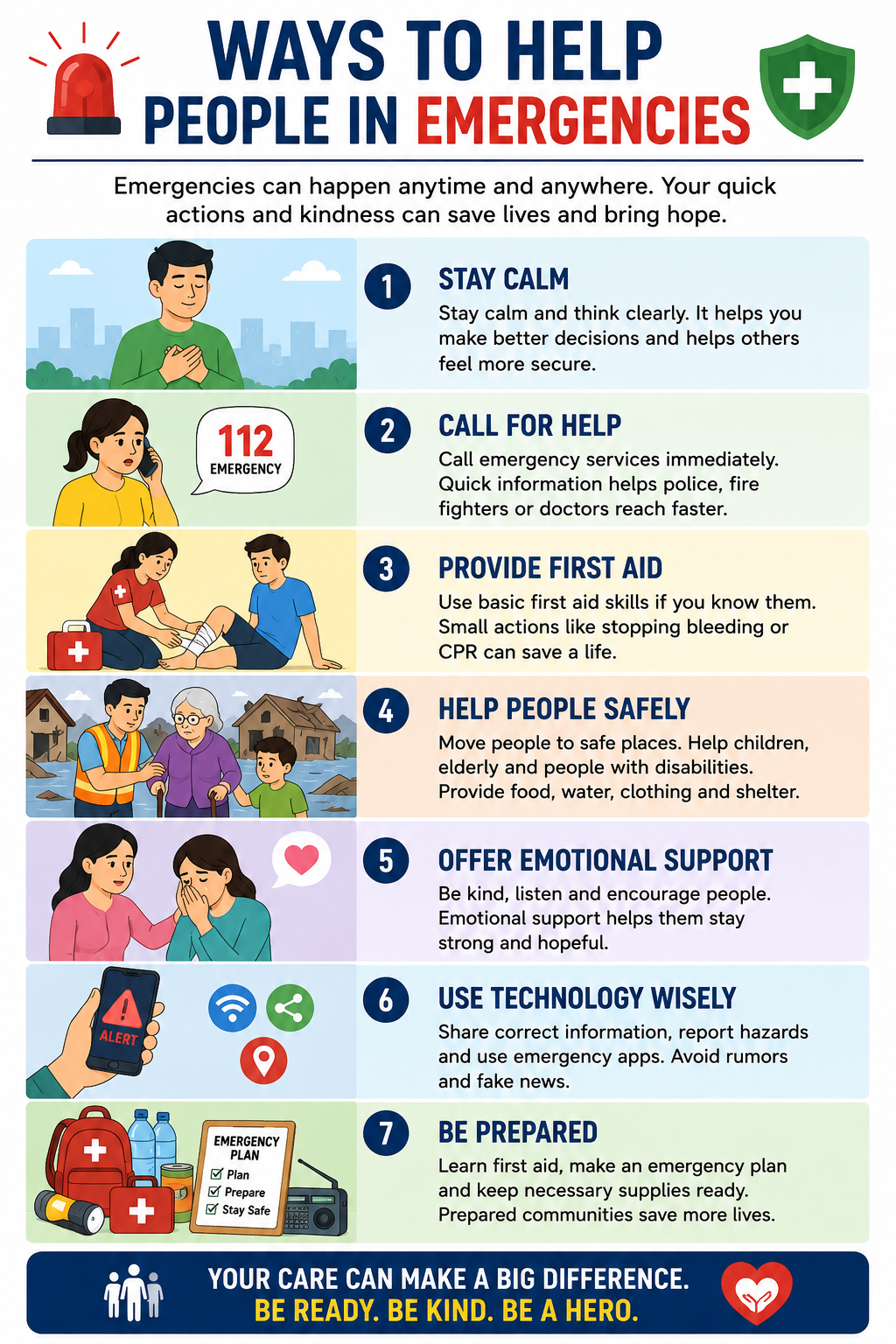
One of the most important ways to help is by staying calm. Panic can make a situation worse and prevent people from making good decisions. A calm person can think clearly and help others act safely. Calling emergency services immediately is another essential step. Quick communication with the police, fire department, or ambulance service ensures that professional help arrives as soon as possible.
Providing first aid is also very useful. Basic knowledge of first aid can help injured people until medical professionals arrive. For example, stopping bleeding, helping someone who has fainted, or performing CPR in critical situations can save lives. However, it is important to act only if you know the correct procedures.
In emergencies such as floods, earthquakes, or fires, helping people move to a safe location is crucial. Assisting children, elderly people, and individuals with disabilities should be a priority because they may need extra support. Offering food, water, clothing, and temporary shelter can also help those affected by disasters.
Emotional support is another important form of help. People often feel frightened, stressed, or confused during emergencies. Kind words, encouragement, and reassurance can help them remain calm and hopeful. Listening to their concerns can make a significant difference in their recovery.
Technology can also be used to help. Sharing accurate information, reporting hazards, and using emergency apps can assist both victims and rescue teams. However, it is important to avoid spreading rumors or false information, as this can create confusion and panic.
Finally, preparing for emergencies in advance is one of the best ways to help others. Learning first aid, participating in disaster preparedness programs, and keeping emergency supplies ready can make communities safer and more resilient.
In conclusion, helping people during emergencies requires courage, responsibility, and compassion. By staying calm, providing assistance, offering support, and being prepared, we can protect lives and contribute to the well-being of our communities.