
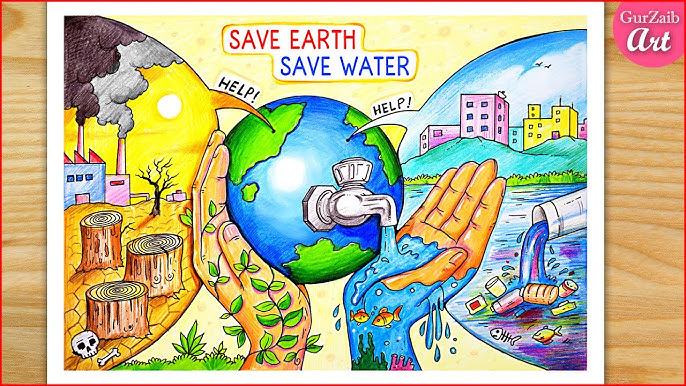
Water conservation is a crucial step in protecting the environment. It is an important compound that supports life on Earth. The world has been facing water-related disasters due to the scarcity of freshwater. 70% of the Earth, as well as the human body, is composed of water, but there is a limited amount of freshwater to use. Owing to the ever-increasing population, climatic changes, global warming, and pollution, the need for the conservation of water is increasing. To do so, it is our fundamental duty to conserve water by planting more trees, managing water plants, storing rainwater, and making smart use of water.
Water Scarcity
Water scarcity is a critical global issue that needs strict attention when the demand for freshwater exceeds the available supply of water. It can manifest in various ways, including a lack of access to clean drinking water, inadequate water for agriculture and industrial processes, and stressed or depleted natural water sources.
Here are some factors that contribute to water scarcity:
- Climate change
- Growing population
- Global warming
- Inefficient water management
- Water pollution
- Increasing demand
- Floods
- Droughts
- Poor irrigation techniques
- Wastage of water, and much more.
Ways to Conserve Water
Conserving water is crucial to help address water scarcity and ensure a sustainable water supply for both present and future generations. You can contribute individually by taking small measures to conserve water, like turning off the tap when not in use. Likewise, here are some ways to conserve water:
- Drip irrigation technique
- Soil management
- Plantation of drought-tolerant crops
- Apply Mulching
- Recycle and reuse water
- Rainwater harvesting
- Desalination
- Spread awareness to conserve water
- Donate to the water cleaning campaign
- Implement proper water management techniques.
Essay on Water Conservation in 500 Words
Water is a vital resource for life on Earth. It is crucial for agriculture, industry, domestic consumption, and ecosystem preservation. However, with rising populations, industrialisation, and climate change, water shortage has emerged as a critical worldwide issue. Water conservation is therefore critical to ensure the sustainable use of this limited resource.
Importance of Water Conservation
Water is essential for all life forms. Humans use it for drinking, cooking, sanitation, and irrigation. Agriculture, which feeds the globe, depends significantly on freshwater resources. Similarly, industries require water for production operations. Aside from human requirements, water supports aquatic and terrestrial ecosystems, preserving biodiversity and ecological balance.
Despite their importance, water resources are severely challenged. Overuse, pollution, and uneven distribution have resulted in water crises in many areas. Conserving water ensures that this resource is available to future generations, promotes sustainable development, and preserves the environment.
Causes of Water Scarcity
A number of reasons contribute to water scarcity. Some of the main causes of water scarcity are:
- Overexploitation: It is the excessive use of water for agricultural, industrial, and domestic reasons.
- Pollution: Industrial effluents, agricultural runoff, and untreated sewage damage water supplies.
- Deforestation: It reduces rainfall and disturbs the water cycle.
- Climate change Alters rainfall patterns, resulting in droughts.
- Population growth: Increases the need for freshwater.
Ways To Conserve Water
It is very important to conserve water for future generations, and for that, we should use water cautiously. There are various ways to conserve energy, a few of them mentioned below:
- Rainwater Harvesting: Collecting and storing rainwater for reuse reduces dependency on groundwater.
- Efficient Irrigation Practices: Techniques such as drip irrigation and sprinklers reduce water waste in agriculture.
- Repairing Leaks: Fixing leaks in pipelines and taps helps to prevent water loss.
- Water recycling: It refers to the treatment and reuse of wastewater for industrial or agricultural purposes.
- Awareness Campaigns: Through community initiatives, individuals are educated on the importance of water conservation.
- Afforestation: Planting trees contributes to the water cycle and minimises soil erosion.
- Water-Saving Devices: Using low-flow faucets, dual-flush toilets, and water-efficient appliances helps to reduce water consumption.
Role of Individuals in Water Conservation
Every individual can contribute to water conservation by adopting simple practices. These practices are simple and can be used in daily life by individuals. By following the given practices, you can play a major role in conserving water, such as,
- Turning off the taps while brushing your teeth.
- Using buckets instead of pipes to wash vehicles.
- Water plants early in the morning or late in the evening to reduce evaporation.
- Avoid water-intensive crops and goods.
- Community action may boost these efforts, resulting in significant impacts on water conservation.
Government Efforts to Conserve Water
Governments have an important role in ensuring sustainable water management. Their policies should focus on:
1. Promoting water-saving technology in agriculture and industries.
2. Adopting strict rules to prevent water pollution.
3. Offering incentives to set up rainwater harvesting and wastewater treatment systems.
4. Increasing public awareness through campaigns and educational initiatives.
Water conservation is more than a responsibility; it is necessary for life to exist on Earth. By adopting sustainable behaviours, reducing waste, and safeguarding water sources, we can ensure that this valuable resource is available for future generations. Whether through individual efforts, community initiatives, or government legislation, every move towards water conservation contributes to a healthy planet. Let us commit to using water properly.Water conservation is the individual or collective practice of efficient use of water. This helps in protecting the Earth from the situation of water scarcity. We can individually contribute to water conservation by not wasting water, reducing the over-consumption of water, using rainwater harvesting, etc. Water conservation is an important issue because there is a limited amount of fresh water available on Earth