
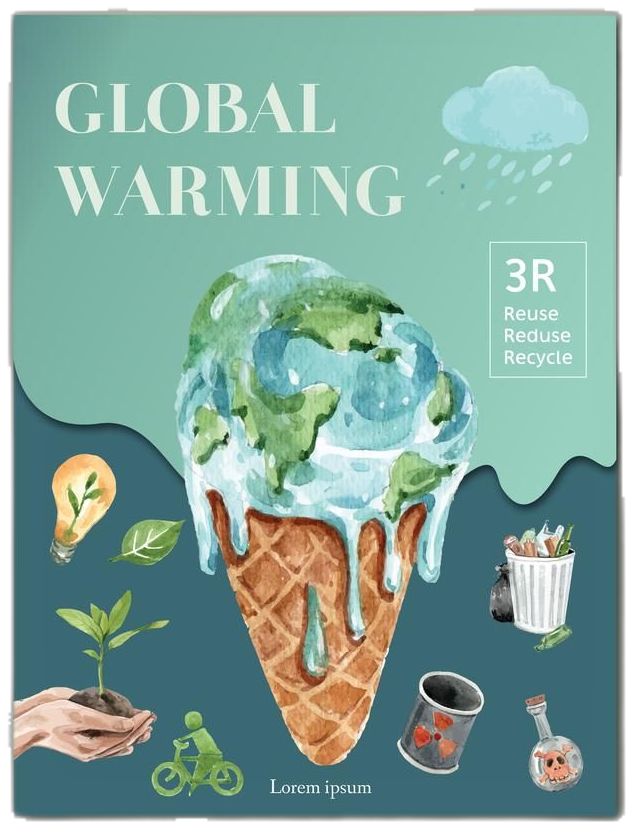
Climate Change and the Unequal Future of Humanity
Climate change is no longer a distant scientific prediction or a topic limited to academic debate. It has become one of the defining realities of the twenty-first century, shaping economies, political systems, ecosystems, and human lives across the globe. Rising temperatures, extreme weather events, water scarcity, and declining biodiversity are not isolated environmental concerns; they are interconnected crises that threaten social stability and global development. Yet, perhaps the most troubling aspect of climate change is not only its environmental impact, but its unequal consequences. The people who contribute the least to global carbon emissions are often the ones who suffer the most.
The scientific evidence surrounding climate change is overwhelming. According to decades of research conducted by climate scientists worldwide, the Earth’s average temperature has risen significantly due to human activities, particularly the burning of fossil fuels such as coal, oil, and natural gas. These activities release greenhouse gases into the atmosphere, trapping heat and disrupting natural climate systems. The result is visible in melting glaciers, rising sea levels, intense heat waves, floods, droughts, and increasingly unpredictable weather patterns.
However, climate change cannot be understood purely through scientific statistics and temperature graphs. At its core, it is also a human issue. In many developing nations, farmers face crop failures because rainfall patterns have become irregular. Coastal communities are losing homes due to rising sea levels, while low-income populations often lack the financial resources needed to recover from climate disasters. Meanwhile, wealthier countries and corporations, which historically contributed far more to greenhouse gas emissions, possess greater infrastructure and economic resilience to adapt to environmental changes.
This imbalance raises important ethical and political questions. Should developing countries slow their industrial growth to reduce emissions, even though industrialized nations became wealthy through centuries of carbon-intensive development? Who should bear the financial responsibility for climate adaptation and recovery? These questions reveal that climate change is not simply an environmental crisis; it is also a matter of justice, responsibility, and global inequality.
At the same time, technological innovation offers hope. Renewable energy sources such as solar and wind power are becoming more affordable and efficient. Advances in electric transportation, sustainable agriculture, and green architecture demonstrate that economic progress does not necessarily require environmental destruction. Around the world, young activists, scientists, policymakers, and local communities are pushing governments and corporations toward more sustainable practices.
Nevertheless, technological progress alone is insufficient without collective political will. Many governments continue to prioritize short-term economic interests over long-term environmental stability. International agreements often face challenges because countries differ in their economic priorities and political agendas. Climate action requires global cooperation on a scale rarely seen in human history.
Education also plays a crucial role in addressing climate change. A society that understands environmental science and sustainability is more likely to make informed decisions about consumption, energy use, and public policy. Universities, schools, and media institutions therefore carry a significant responsibility in shaping public awareness and encouraging critical thinking about environmental issues.
Ultimately, climate change forces humanity to reconsider its relationship with nature and with one another. It challenges the assumption that economic growth can continue indefinitely without environmental consequences. More importantly, it reveals how deeply interconnected the modern world has become. A drought in one region can affect food prices globally, while pollution generated in one country contributes to disasters in another.
The future of climate change will depend not only on scientific innovation but also on moral choices. Humanity possesses the knowledge and resources needed to reduce environmental damage. The real question is whether nations, corporations, and individuals are willing to act before the consequences become irreversible. Climate change is not merely about saving the planet; the planet will continue to exist. The true challenge lies in preserving a world in which human civilization can survive with dignity, stability, and equality.