
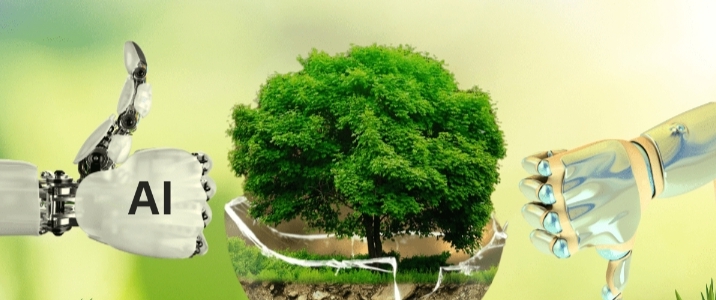
Artificial intelligence (AI) has entered all areas of modern life. Chatbots, online recommendations, virtual assistants, automated systems, and more are widely used. AI has certainly made many processes and tasks easier. However, people are more focused on the benefits of AI than on its negative effects, including its impact on the environment. The excessive use of AI raises serious environmental concerns that need immediate attention.
One of the main negative effects of AI on the environment is high power consumption. AI relies on large data centers and computers that use electricity nonstop. Training AI models involves thousands of computers working for days or even weeks. Most of the energy comes from burning fossil fuels, which releases CO2 and other greenhouse gases into the atmosphere. Therefore, artificial intelligence contributes to the climate change problem.
Another consequence of AI is the constant need for producing electronic hardware. Servers, processors, coolers, and storage devices are essential for AI. To create these items, companies must mine various metals and rare earth elements, which harms ecosystems and depletes natural resources. Discarded devices also contribute to the growing problem of electronic waste pollution.
AI data centers also consume large amounts of water for cooling. Big companies that run AI systems use millions of liters of water to keep servers from overheating. In places where water is already scarce, this can add more strain on natural resources and local communities.
Additionally, the unnecessary use of AI often promotes wasteful digital habits. Many people turn to AI for tasks that can be easily done without it. This includes generating repetitive content, creating too many images, or relying on AI for every small task. Such overreliance raises energy consumption without delivering significant benefits. Convenience should not lead to environmental harm.
However, this does not mean AI is entirely harmful. When used responsibly, AI can actually benefit the environment. It can improve energy efficiency, track pollution, predict natural disasters, and support scientific research on climate change. The problem lies not with AI itself but with its reckless and excessive use.
Therefore, we should discourage unnecessary use of AI. People need to learn to use technology wisely and only when it is truly necessary. Governments and tech companies should also invest in renewable energy, eco-friendly data centers, and sustainable practices to minimize environmental damage. If society continues to use AI irresponsibly, the environmental costs may become unmanageable in the future.
In conclusion, while AI offers many benefits, its environmental impact is considerable. High electricity use, carbon emissions, e-waste, and water consumption are serious issues tied to the increasing use of AI. Responsible and limited use of AI is crucial to ensure that technological progress does not harm the planet we rely on.