
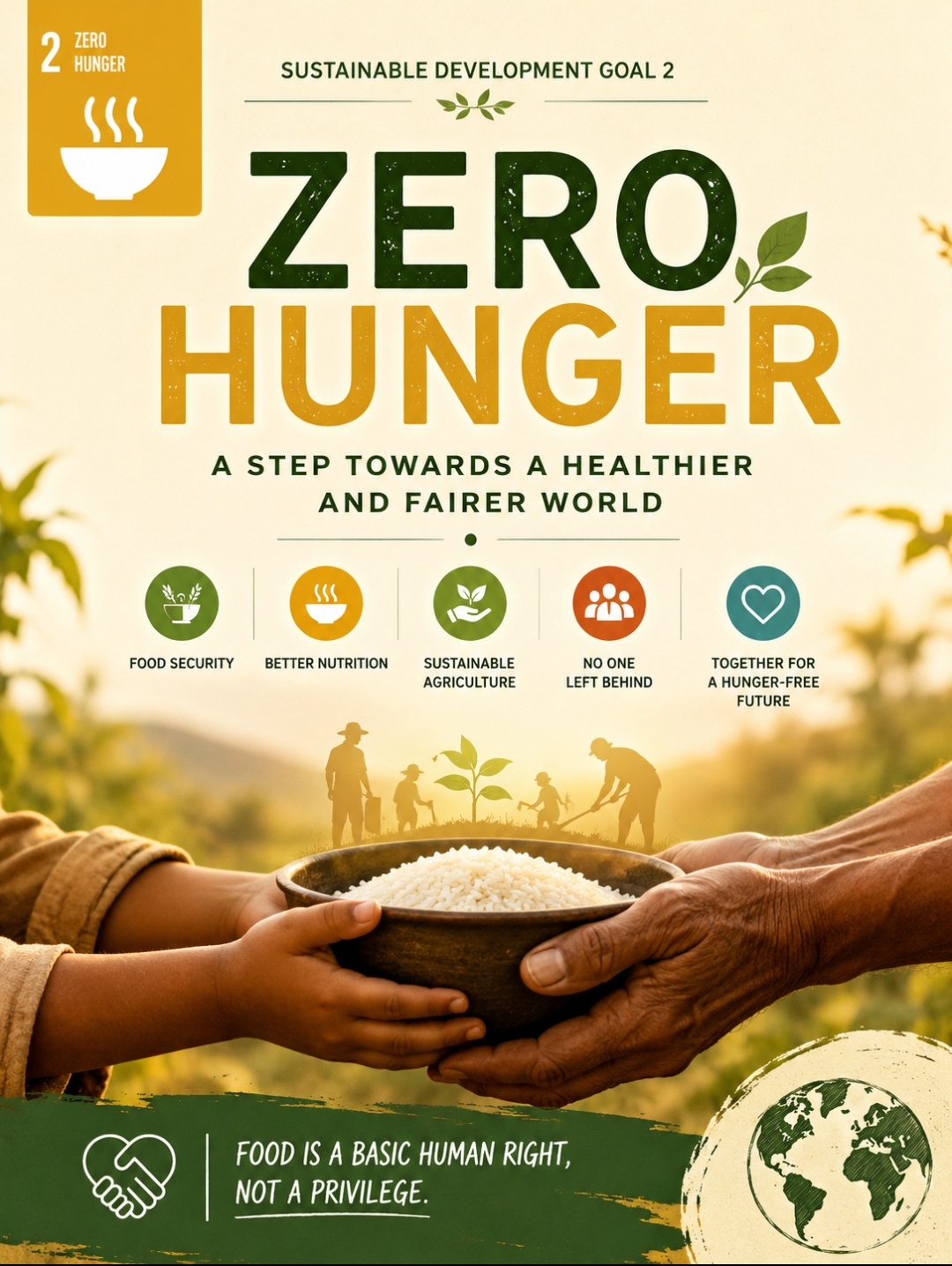
Zero Hunger: A Step Towards a Healthier and Fairer World
Hunger is not just about empty stomachs—it is about lost potential, poor health, and limited opportunities. Sustainable Development Goal 2 (Zero Hunger), set by the United Nations, aims to end hunger, achieve food security, improve nutrition, and promote sustainable agriculture by 2030.
Even today, millions of people across the world struggle to get enough nutritious food. This is not always because food is unavailable, but often because it is not distributed equally or people cannot afford it. Hunger affects children the most, leading to poor growth, weak immunity, and difficulty in learning.
Why Zero Hunger Matters
Zero Hunger is important because it connects with many other global goals. Without proper nutrition:
Students cannot focus or perform well in school
People fall sick more often
Poverty continues from one generation to another
Ending hunger helps build stronger communities, better education systems, and healthier societies.
Causes of Hunger
There are several reasons why hunger still exists:
Poverty – People cannot afford food
Climate change – Droughts and floods destroy crops
Food wastage – Large amounts of food are thrown away daily
Unequal distribution – Food doesn’t reach everyone equally
Solutions for a Hunger-Free World
Achieving Zero Hunger is possible if we take the right steps:
Reduce food wastage by taking only what we need
Support local farmers and promote sustainable agriculture
Spread awareness about nutrition and balanced diets
Help the needy by donating food or supporting community kitchens
Even small actions by individuals can create a big impact.
What Can Students Do?
As students, we may think we cannot do much—but that’s not true. We can:
Avoid wasting food in school or at home
Share extra food with those in need
Participate in awareness campaigns
Encourage others to value food
Conclusion
Zero Hunger is not just a global goal—it is a shared responsibility. A world without hunger is a world where everyone gets a fair chance to grow, learn, and succeed. If each of us takes a small step, together we can build a future where no one sleeps hungry.
“Food is a basic human right, not a privilege.”