
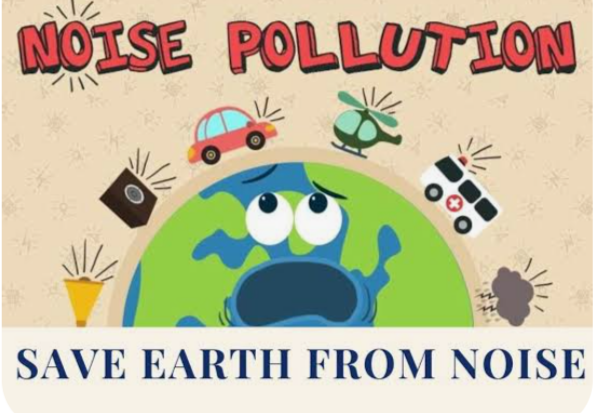
Sound pollution, also known as noise pollution, is the presence of unwanted or harmful sounds in the environment. It is becoming a major problem in cities and towns due to the growth of industries, vehicles, loudspeakers, and construction work. Excessive noise affects both humans and animals and disturbs daily life.
The main sources of sound pollution are traffic, factory machines, horns, loud music, generators, and firecrackers. In crowded areas, the continuous sound of vehicles and machines creates a noisy environment. During festivals and celebrations, loudspeakers and fireworks also increase noise levels.
Sound pollution has many harmful effects. It can cause stress, headaches, lack of concentration, hearing problems, and sleep disturbances. Students find it difficult to study in noisy surroundings. Animals and birds are also affected because loud sounds disturb their communication and natural behavior.
We can reduce sound pollution by following simple steps. People should avoid unnecessary honking and keep the volume of music low. Factories should use soundproof machines, and planting more trees can help absorb noise. The government should also make strict rules to control loudspeakers and firecrackers.
In conclusion, sound pollution is a serious environmental issue that must not be ignored. Everyone should work together to create a peaceful and healthy environment for future generations.