
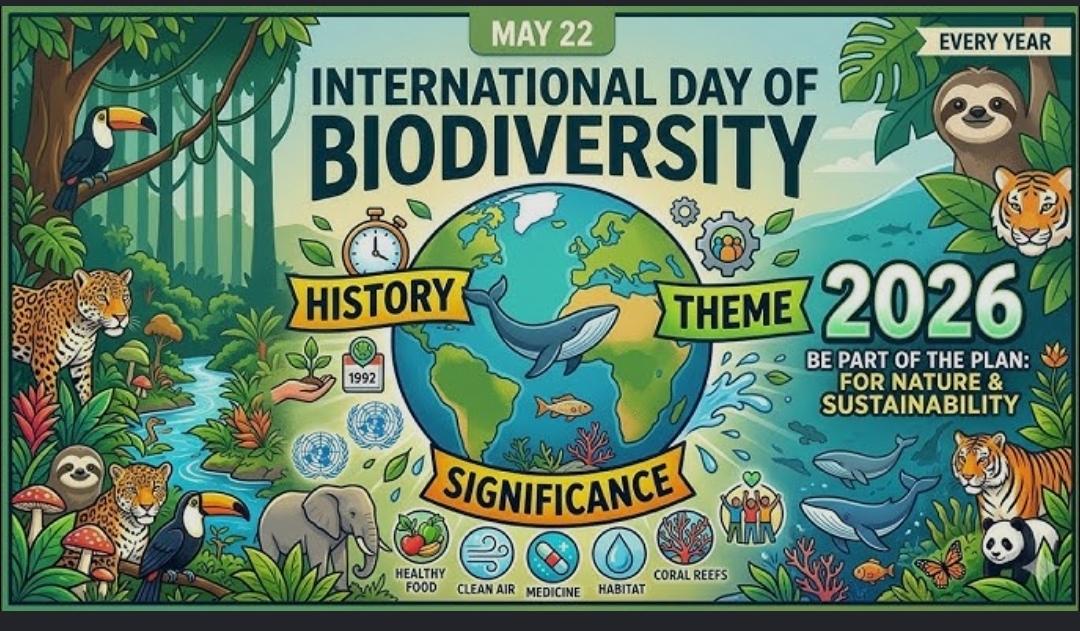
The International Day for Biological Diversity was observed on May 22, 2026. The official theme for the year was "Acting locally for global impact," emphasizing grassroots, community-led initiatives to halt and reverse biodiversity loss in alignment with the Kunming-Montreal Global Biodiversity Framework
Seeds of different species often fall beneath trees where hornbills nest. This is how these magnificent birds help regenerate forests; and why they are rightly called the “farmers of the forest.”
But how do they do it?
India is home to 9 species of hornbills. During the nesting season, the female seals herself inside the nest cavity to incubate and raise the chick. For nearly 3–4 months, the male takes complete responsibility for feeding the family.
During this period, the male continuously collects fruits and figs from across the forest and brings them to the nest. Hornbills swallow fruits whole, with the seeds remaining intact.
The transfer, however, is not always smooth. Many seeds fall during flight, feeding, or transportation. As a result, seeds get dispersed far and wide across the forest, helping new plants and trees grow in different areas.
Protecting biodiversity therefore also means protecting these incredible species that silently work every day to keep forests alive.
Core Highlights
Global Initiative: The day serves as a universal celebration to increase awareness about the vital importance of biodiversity and the ongoing threats it faces.
Thematic Focus: The 2026 theme highlighted how achieving massive, global environmental goals depends upon concrete, on-the-ground action by individuals, indigenous communities, and local authorities
How to Get Involved
While the official day has passed, you can continue to participate by bringing focus to nature in your community.
Local Action: Implement nature-positive practices close to home, such as planting native species or reducing localized waste.
Educational Toolkits: Review campaign materials and explore global events on the official Convention on Biological Diversity Campaign page.
Join the Conversation: Continue sharing stories of grassroots conservation on social media using the hashtag #BiodiversityDay