
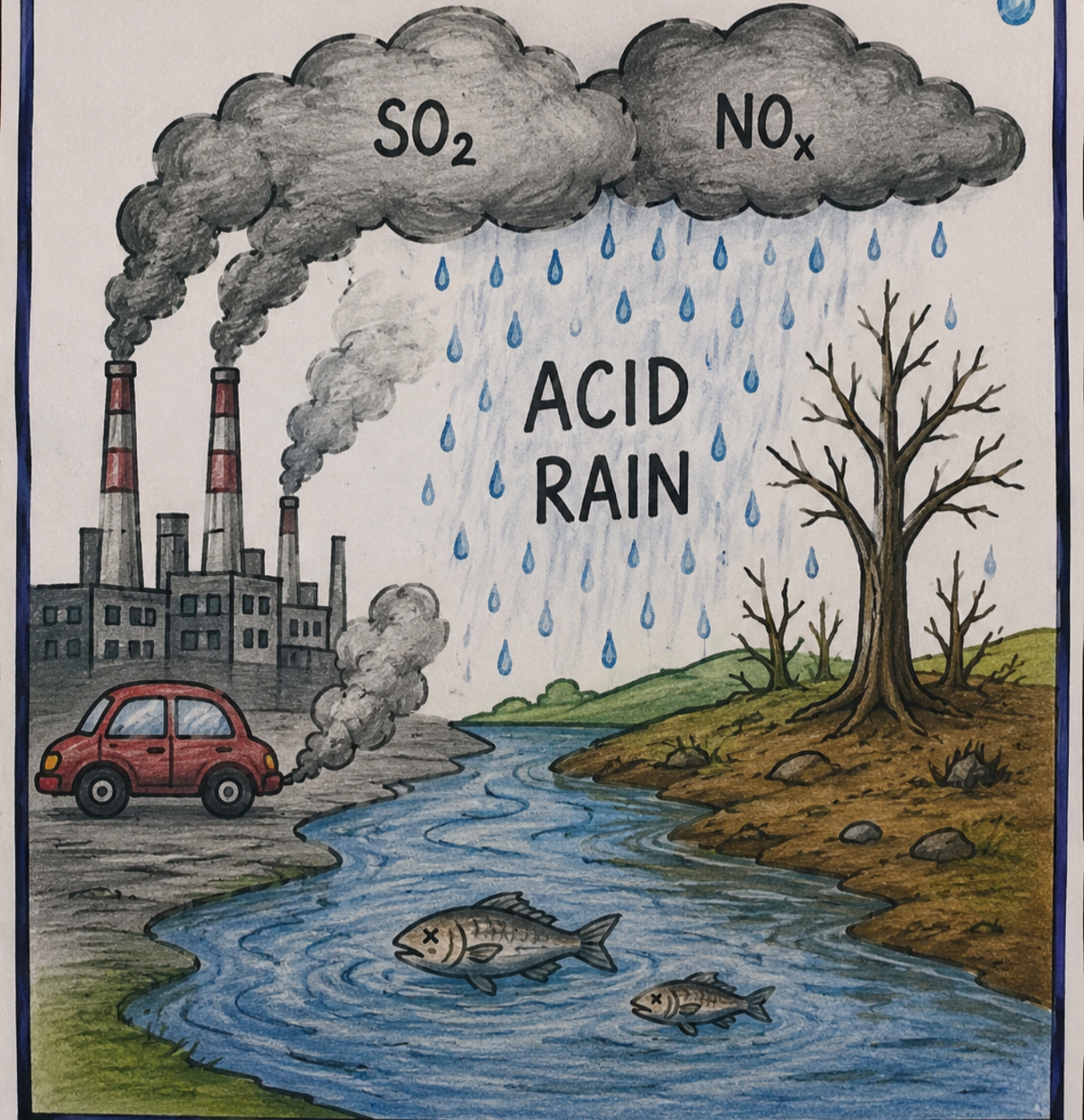
Acid rain is a type of rainfall that contains harmful acids. It is caused by pollution in the air. When factories, vehicles, and power plants release gases like sulfur dioxide and nitrogen oxides, these gases mix with water vapor in the atmosphere and form acids. These acids then fall to the Earth as rain, snow, or fog.
Acid rain is harmful to the environment. It damages forests, crops, rivers, and lakes. Many fish and water animals die because acidic water is dangerous for them. Acid rain also weakens trees and harms soil by removing important nutrients. Historic buildings and monuments made of marble or limestone are slowly damaged by acid rain.
Human health can also be affected indirectly. The pollution that causes acid rain can lead to breathing problems such as asthma and lung diseases. Air pollution also makes the environment unhealthy for living beings.
There are many ways to reduce acid rain. Industries should use cleaner fuels and install filters in factories. People should use public transport, save electricity, and reduce pollution. Planting more trees and using renewable energy sources like solar and wind energy can also help.
In conclusion, acid rain is a serious environmental problem caused by human activities. Everyone should work together to reduce pollution and protect nature. A clean and healthy environment is important for the future of our planet.