
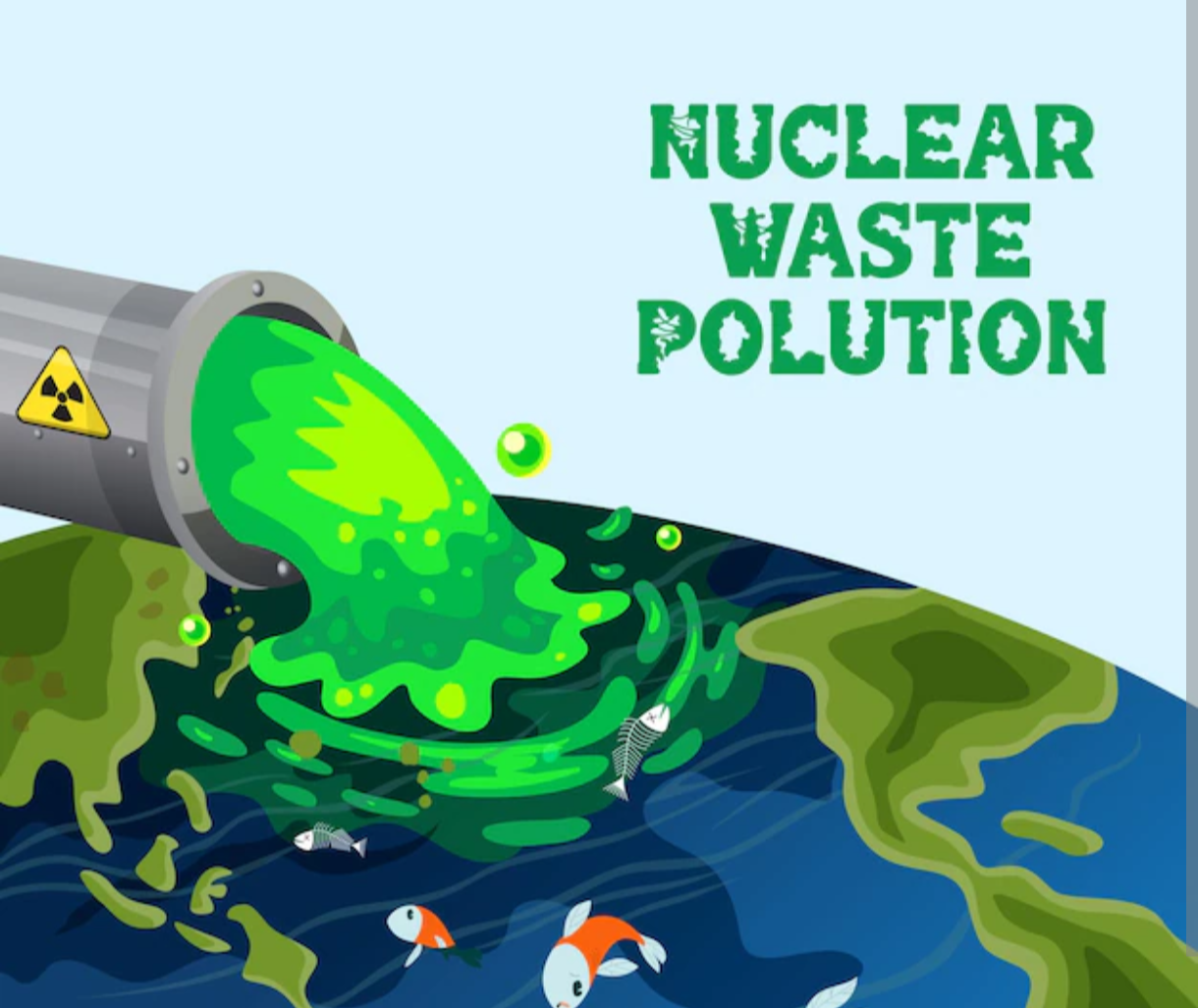
Nuclear waste is one of the biggest environmental problems in the modern world. It is produced from nuclear power plants, scientific research, and the use of radioactive materials in hospitals and industries. Although nuclear energy provides a large amount of electricity, it also creates dangerous waste that can remain harmful for thousands of years.
There are different types of nuclear waste. Low-level waste includes items like gloves, tools, and clothing that have been exposed to radiation. High-level waste mainly comes from used fuel in nuclear reactors. This type of waste is highly radioactive and very dangerous to humans, animals, and the environment.
Improper disposal of nuclear waste can cause serious pollution. Radioactive materials can contaminate soil, water, and air. Exposure to radiation may lead to severe health problems such as cancer, skin diseases, and genetic mutations. Nuclear accidents like the Chernobyl disaster and the Fukushima Daiichi nuclear disaster showed how harmful radioactive leakage can be.
To manage nuclear waste safely, scientists store it in special containers and underground facilities designed to prevent leakage. Many countries are also researching new technologies to recycle nuclear fuel and reduce radioactive waste. Strict government rules and proper monitoring are necessary to ensure public safety.
In conclusion, nuclear waste is a serious issue that needs careful handling and responsible management. While nuclear energy can help meet the world’s energy needs, protecting the environment and human health should always remain the top priority.