
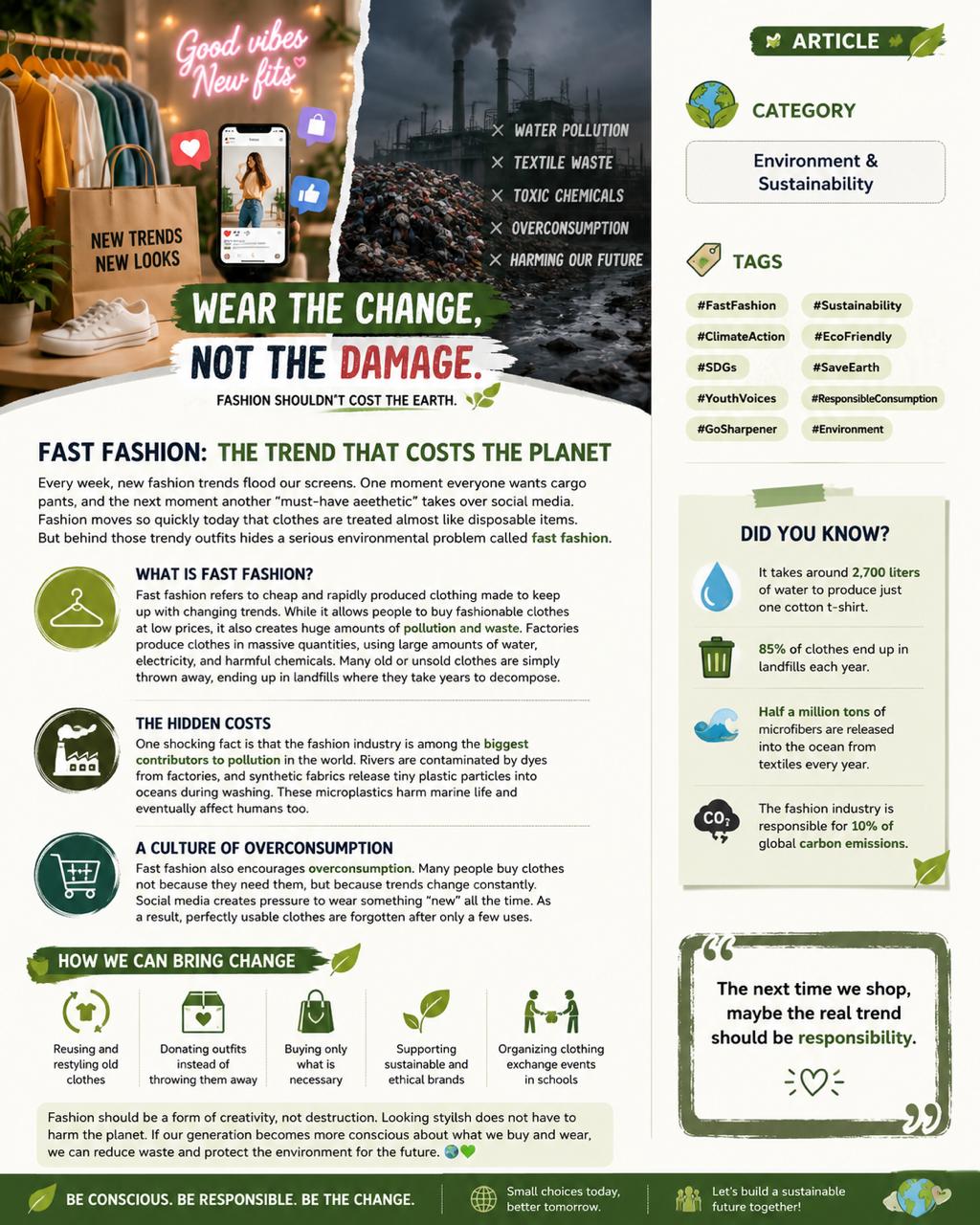
Every week, new fashion trends flood our screens. One moment everyone wants cargo pants, and the next moment another “must-have aesthetic” takes over social media. Fashion moves so quickly today that clothes are treated almost like disposable items. But behind those trendy outfits hides a serious environmental problem called fast fashion.
Fast fashion refers to cheap and rapidly produced clothing made to keep up with changing trends. While it allows people to buy fashionable clothes at low prices, it also creates huge amounts of pollution and waste. Factories produce clothes in massive quantities, using large amounts of water, electricity, and harmful chemicals. Many old or unsold clothes are simply thrown away, ending up in landfills where they take years to decompose.
One shocking fact is that the fashion industry is among the biggest contributors to pollution in the world. Rivers are contaminated by dyes from factories, and synthetic fabrics release tiny plastic particles into oceans during washing. These microplastics harm marine life and eventually affect humans too.
Fast fashion also encourages overconsumption. Many people buy clothes not because they need them, but because trends change constantly. Social media creates pressure to wear something “new” all the time. As a result, perfectly usable clothes are forgotten after only a few uses.
However, students and young people can help bring change. Small actions can create a big impact:
Reusing and restyling old clothes
Donating outfits instead of throwing them away
Buying only what is necessary
Supporting sustainable and ethical brands
Organizing clothing exchange events in schools
Fashion should be a form of creativity, not destruction. Looking stylish does not have to harm the planet. If our generation becomes more conscious about what we buy and wear, we can reduce waste and protect the environment for the future.