
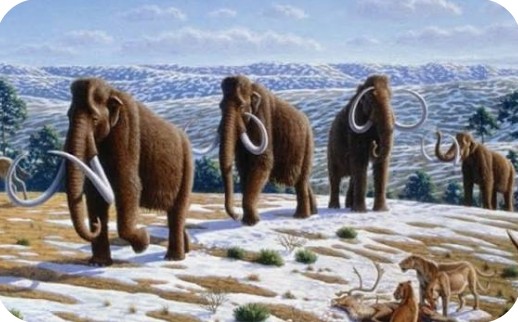
While we often imagine the Ice Age as one long, frozen movie, the reality was a millions-of-years-long cycle of "deep freezes" and "warm thaws." Scientifically, we are actually still in an ice age today (the Quaternary Ice Age) because we still have permanent ice sheets in Greenland and Antarctica.
Here is what made the "Big Freeze" so legendary:
The Age of Giants: The cold environment allowed massive mammals, called megafauna, to thrive. This included Woolly Mammoths with 16-foot tusks, Giant Ground Sloths that stood 12 feet tall, and Glyptodons, which were essentially armadillos the size of a car.
A Different Map: So much of the world's water was frozen into glaciers that sea levels dropped by about 400 feet (120 meters). This created "land bridges" like Beringia, which allowed humans and animals to walk between Russia and Alaska.
The "Hell Pig" and "Real" Dire Wolves: Predators were just as oversized. Saber-toothed cats (Smilodon) had 7-inch fangs designed for ambushing large prey, and Dire Wolves—which were real animals, not just fantasy creatures—had bone-crushing jaws much stronger than today's wolves.
Human Survival: Early humans didn't just survive; they innovated. They built homes out of mammoth bones, sewed the first tailored clothing with bone needles to stay warm, and worked in large teams to hunt massive game.
The "Snowball Earth" Mystery: The most extreme ice age happened around 700 million years ago. Some scientists believe the entire planet was a Snowball Earth, with ice covering everything from the poles all the way to the equator.