
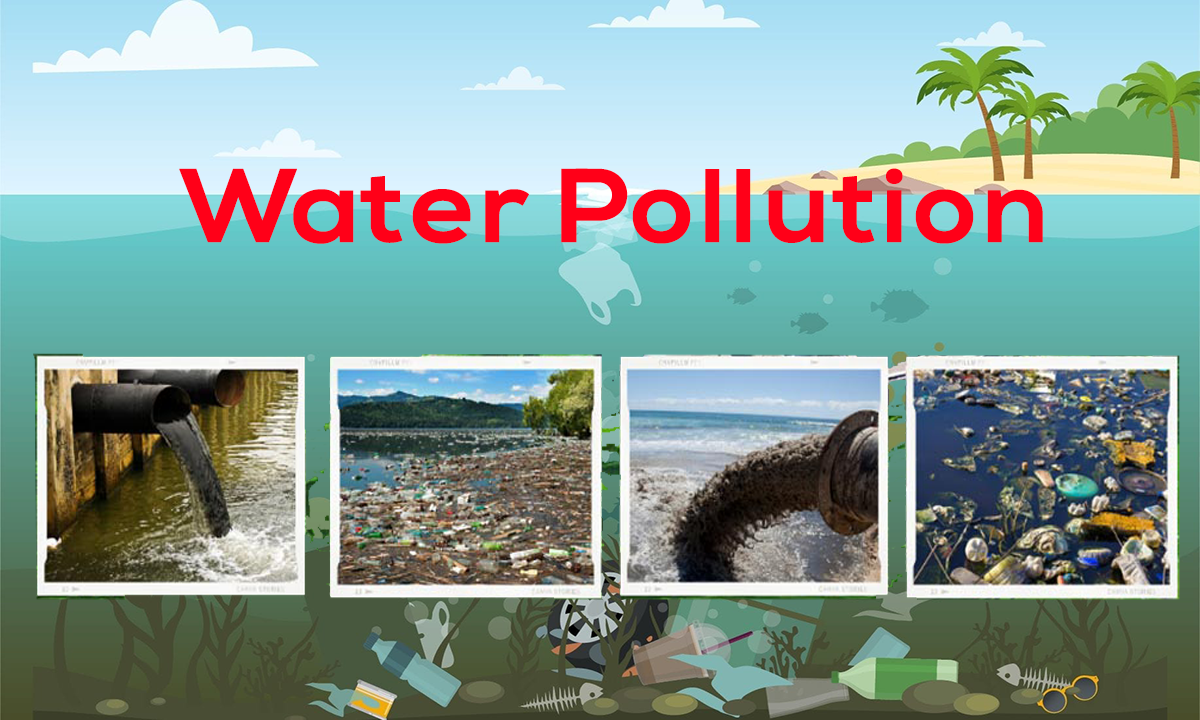
Water is the lifeline of our planet. From sustaining human life to supporting plants, animals, and entire ecosystems, clean water is essential for survival. Unfortunately, water pollution has emerged as one of the most serious environmental challenges of our time. It refers to the contamination of water bodies such as rivers, lakes, oceans, and groundwater by harmful substances, making the water unsafe for use and life.
One of the major causes of water pollution is the discharge of untreated sewage and industrial waste into water bodies. Factories often release chemicals, heavy metals, and toxic effluents directly into rivers. Agricultural activities also contribute through runoff containing fertilizers, pesticides, and insecticides, which seep into nearby streams and ponds. Additionally, domestic waste, plastic litter, oil spills, and religious or cultural practices further degrade water quality.
The effects of water pollution are far-reaching and alarming. Polluted water becomes unfit for drinking, leading to the spread of water-borne diseases such as cholera, typhoid, and dysentery. Aquatic life suffers immensely as toxic substances reduce oxygen levels in water, causing the death of fish and other organisms. Over time, entire aquatic ecosystems can collapse, disturbing the natural food chain. Water pollution also affects agriculture, as contaminated water used for irrigation harms soil quality and crop yield.
Preventing water pollution requires collective responsibility and conscious action. Industries must treat their waste before disposal, and governments should strictly enforce environmental laws. Proper sewage treatment systems should be developed, especially in urban and semi-urban areas. Farmers can adopt eco-friendly practices by reducing the excessive use of chemical fertilizers and pesticides. On an individual level, people should avoid throwing waste into water bodies, reduce plastic usage, and conserve water whenever possible.
In conclusion, water pollution is not just an environmental issue but a threat to human health and future generations. Protecting our water resources is essential for sustainable development and ecological balance. By adopting responsible practices and spreading awareness, we can ensure that clean and safe water remains available for all. After all, saving water today means securing life tomorrow.