
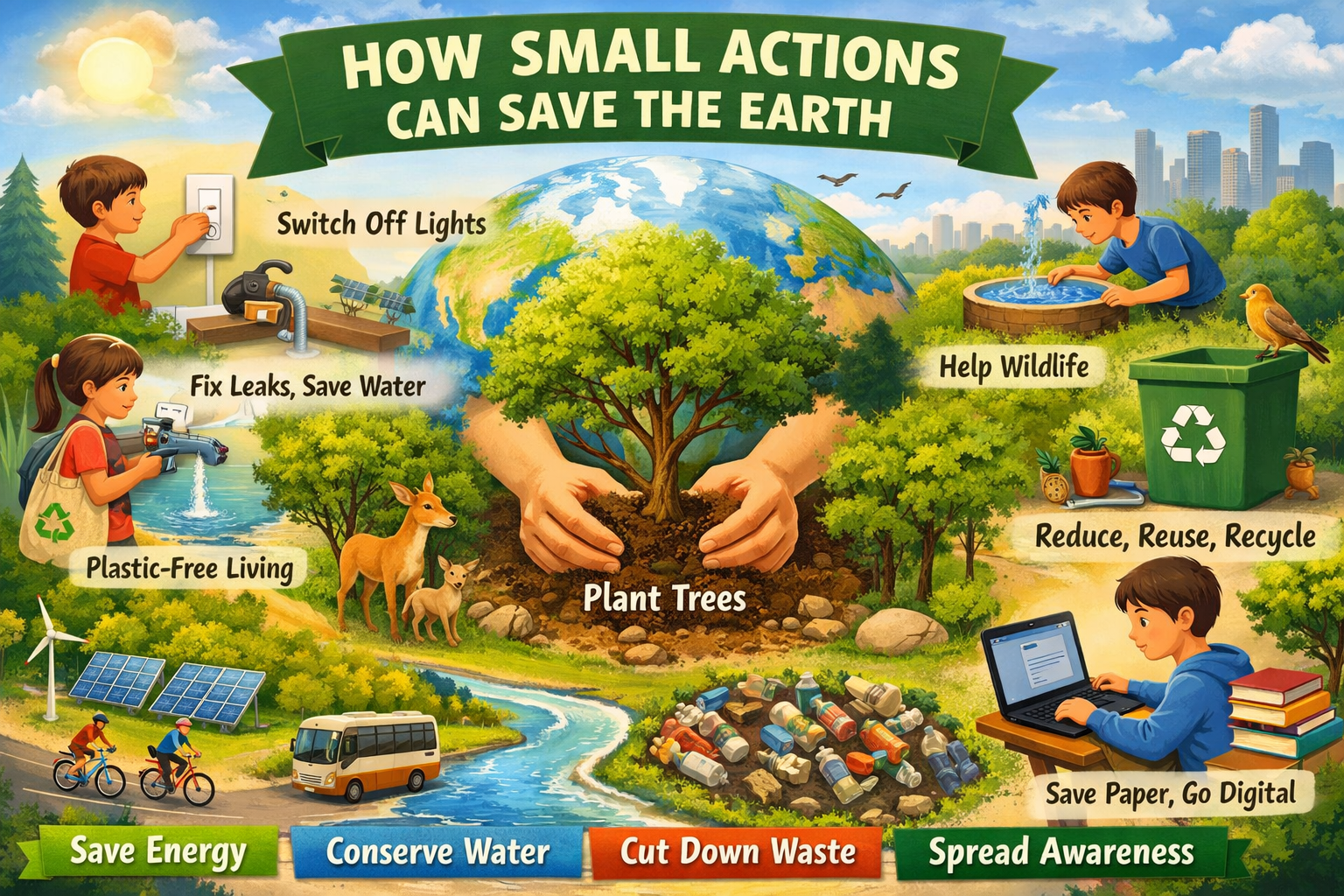
How Small Actions Can Save the Earth
Introduction: The Power of Small Steps
The Earth is our only home. It gives us air to breathe, water to drink, food to eat, and land to live on. From the tallest mountains to the deepest oceans, from tiny insects to huge forests, everything on Earth is connected in a delicate balance. However, due to human activities, this balance is being disturbed. Problems like climate change, global warming, pollution, deforestation, and loss of biodiversity are increasing every day. Many people believe that only governments, scientists, or big organizations can save the Earth. But this belief is incomplete. In reality, small actions taken by ordinary people can create extraordinary change.
Saving the Earth does not always require huge inventions or expensive technology. It begins with simple habits like switching off lights, saving water, planting trees, reducing waste, and being mindful of nature. When millions of people take small steps together, the impact becomes powerful. This article explores how small actions taken in daily life can protect the environment and help save our planet for present and future generations.
Understanding the Environmental Crisis
Before understanding how small actions can help, it is important to understand the problems our Earth is facing.
Climate Change and Global Warming
Climate change refers to long-term changes in temperature and weather patterns. Global warming is caused mainly by greenhouse gases like carbon dioxide released from burning fossil fuels such as coal, petrol, and diesel. These gases trap heat in the atmosphere, making the Earth warmer. As a result, glaciers are melting, sea levels are rising, and extreme weather events like floods, droughts, and heatwaves are becoming more common.
Pollution: Air, Water, and Land
Pollution is one of the biggest threats to the environment. Air pollution from vehicles and factories causes breathing problems. Water pollution from chemicals and plastic harms aquatic life. Land pollution from waste destroys soil fertility. These problems directly affect human health and natural ecosystems.
Deforestation and Loss of Biodiversity
Forests are being cut down for agriculture, industries, and urban development. Trees absorb carbon dioxide and release oxygen, helping regulate the climate. Deforestation leads to loss of wildlife, soil erosion, and imbalance in nature. Many species are becoming extinct due to habitat loss.
Why Small Actions Matter
Many people think, “What difference can one person make?” But history and science show that collective small actions lead to big results.
Imagine a drop of water. One drop seems insignificant, but millions of drops form a river, and rivers create oceans. Similarly, when individuals change their habits, society changes. Small actions are easy to start, cost little, and inspire others. They build awareness, responsibility, and a culture of care for the Earth.
Saving Energy: Small Habits, Big Impact
Switching Off Lights and Appliances
Turning off lights, fans, and electronic devices when not in use saves electricity. Electricity production often involves burning fossil fuels, which release harmful gases. Saving energy reduces pollution and conserves natural resources.
Using Energy-Efficient Devices
Using LED bulbs instead of traditional bulbs consumes less electricity. Energy-efficient appliances reduce power consumption and lower carbon emissions.
Using Natural Light and Air
Opening windows during the day reduces the need for lights and air conditioners. Natural ventilation is healthy and eco-friendly.
Saving Water: Every Drop Counts
Water is essential for life, yet millions of people face water shortages.
Turning Off Taps
Turning off taps while brushing teeth or washing hands saves litres of water every day.
Fixing Leaks
A leaking tap wastes large amounts of water over time. Fixing leaks is a simple but powerful action.
Using Buckets Instead of Showers
Using buckets for bathing instead of long showers saves water, especially in water-scarce areas.
Rainwater Harvesting
Collecting rainwater helps recharge groundwater and reduces dependence on fresh water sources.
Reducing Waste: The 3Rs – Reduce, Reuse, Recycle
Reducing Waste
Buying only what we need reduces waste. Avoiding single-use plastics like bags, bottles, and straws is an important step.
Reusing Items
Reusing bags, containers, clothes, and books reduces the need for new products and saves resources.
Recycling Materials
Recycling paper, plastic, metal, and glass reduces pollution and conserves raw materials.
Plastic-Free Living: A Small Change with Huge Benefits
Plastic is one of the biggest environmental problems today.
Carrying Cloth Bags
Using cloth or jute bags instead of plastic bags reduces plastic waste.
Avoiding Single-Use Plastics
Saying no to plastic cups, plates, and cutlery helps reduce pollution.
Proper Disposal of Plastic Waste
Segregating waste and recycling plastic prevents it from reaching oceans and harming marine life.
Planting Trees: Nature’s Best Solution
Trees are nature’s gift to humanity.
Benefits of Trees
Trees provide oxygen, absorb carbon dioxide, prevent soil erosion, support wildlife, and regulate climate.
Planting and Protecting Trees
Planting even one tree contributes to a greener planet. Protecting existing trees is equally important.
School and Community Tree Drives
Participating in tree plantation programs builds environmental responsibility among students.
Eco-Friendly Transportation: Small Travel Choices
Walking and Cycling
Walking or cycling short distances reduces fuel use and keeps us healthy.
Using Public Transport
Buses and trains reduce the number of vehicles on roads, lowering pollution.
Carpooling
Sharing rides saves fuel and reduces traffic congestion.
Saving Paper: Protecting Forests
Paper comes from trees, and saving paper helps save forests.
Using Both Sides of Paper
Writing on both sides of paper reduces waste.
Digital Notes and Assignments
Using digital devices for notes and homework saves paper.
Recycling Paper
Recycling paper reduces deforestation and energy use.
Responsible Food Habits
Reducing Food Waste
Wasting food means wasting water, energy, and labour used to produce it.
Eating Seasonal and Local Food
Local food requires less transportation, reducing pollution.
Growing Kitchen Gardens
Growing vegetables at home promotes healthy eating and reduces environmental impact.
Protecting Wildlife: Small Acts of Kindness
Respecting Animals
Not harming animals and birds helps maintain ecological balance.
Avoiding Products Made from Animal Parts
Saying no to items made from ivory, fur, or skin protects endangered species.
Providing Water for Birds
Keeping water bowls for birds during summer is a small but compassionate action.
Role of Students in Saving the Earth
Students are the future of the planet.
Creating Awareness
Students can spread awareness through essays, posters, debates, and social media.
Leading by Example
By practicing eco-friendly habits, students inspire family and friends.
Participating in Environmental Campaigns
Joining clean-up drives, tree plantations, and eco-clubs strengthens environmental action.
Technology and Small Actions
Using Technology Wisely
Reducing screen time saves energy.
Spreading Awareness Online
Sharing environmental messages online reaches many people quickly.
The Role of Families and Communities
Eco-Friendly Homes
Families can adopt sustainable habits together.
Community Cleanliness Drives
Clean surroundings improve health and environment.
Government and Citizen Partnership
While governments make laws, citizens must follow them. Small actions by citizens support larger environmental policies.
Moral Responsibility Towards Future Generations
We have borrowed the Earth from future generations. Our actions today will decide their tomorrow. Protecting the environment is a moral duty, not a choice.
Hope for the Future
Despite challenges, there is hope. Around the world, people are waking up to environmental issues. Renewable energy, green movements, and youth activism show that change is possible.
Conclusion: Small Actions, Big Change
Saving the Earth does not require heroic acts alone. It begins with small, consistent, and thoughtful actions taken every day. Turning off a light, saving water, planting a tree, avoiding plastic, and spreading awareness may seem small, but together they create a powerful movement.
If every individual takes responsibility, the Earth can heal. Small actions, when multiplied by millions, can save forests, oceans, wildlife, and the climate. The future of our planet lies not only in the hands of leaders and scientists, but also in the choices made by ordinary people every day.
Let us remember:
The Earth does not need a few people doing zero waste perfectly.
It needs millions of people doing it imperfectly.