
Genesis
The vaquita (Phocoena sinus) is a small species of porpoise that is currently the most endangered marine mammal in the world. It is only found in the northern sector of the Gulf of California, Mexico, therefore, it is often referred to as endemic to this area.
The vaquitas are the smallest of all cetaceans, averaging 1.4–1.5 meters long and weighing up to 55 kilograms. They have a more robust body than other cetaceans. They are characterized by a rounded head without a well-defined beak, and they have distinctive black patches around their eyes and mouth.
The vaquita population is critically endangered with an estimated total of less than 10 individuals remaining. The main cause of this decline is bycatch in illegal gillnets, particularly for totoaba fish. Vaquitas get caught in these nets where they cannot swim to the surface for air, resulting in drowning.
Vaquitas are extremely shy and elusive making them very difficult to study. They usually live individually or in small groups of two or three. Their diet consists of small fish, squid, and crustaceans. The vaquita is estimated to live up to 20 years of age. They have a low reproductive rate, which does not allow for the population to rebound quickly.
Efforts have been made to conserve the vaquita through the establishment of fishing bans and protected areas. However, the vaquita continues to be at immediate risk for extinction. The only way to save the vaquita is through the eradication of gillnets in their habitat.
Size & Appearence
Physical Description
Adult vaquitas are about the same height (1.2 to 1.5 m) as an adult coyote and weigh between 30 and 55 kg. While there are only minor differences in size and shape between male and female vaquitas, most males are slightly smaller and more elongated than that of the female.
Morphology
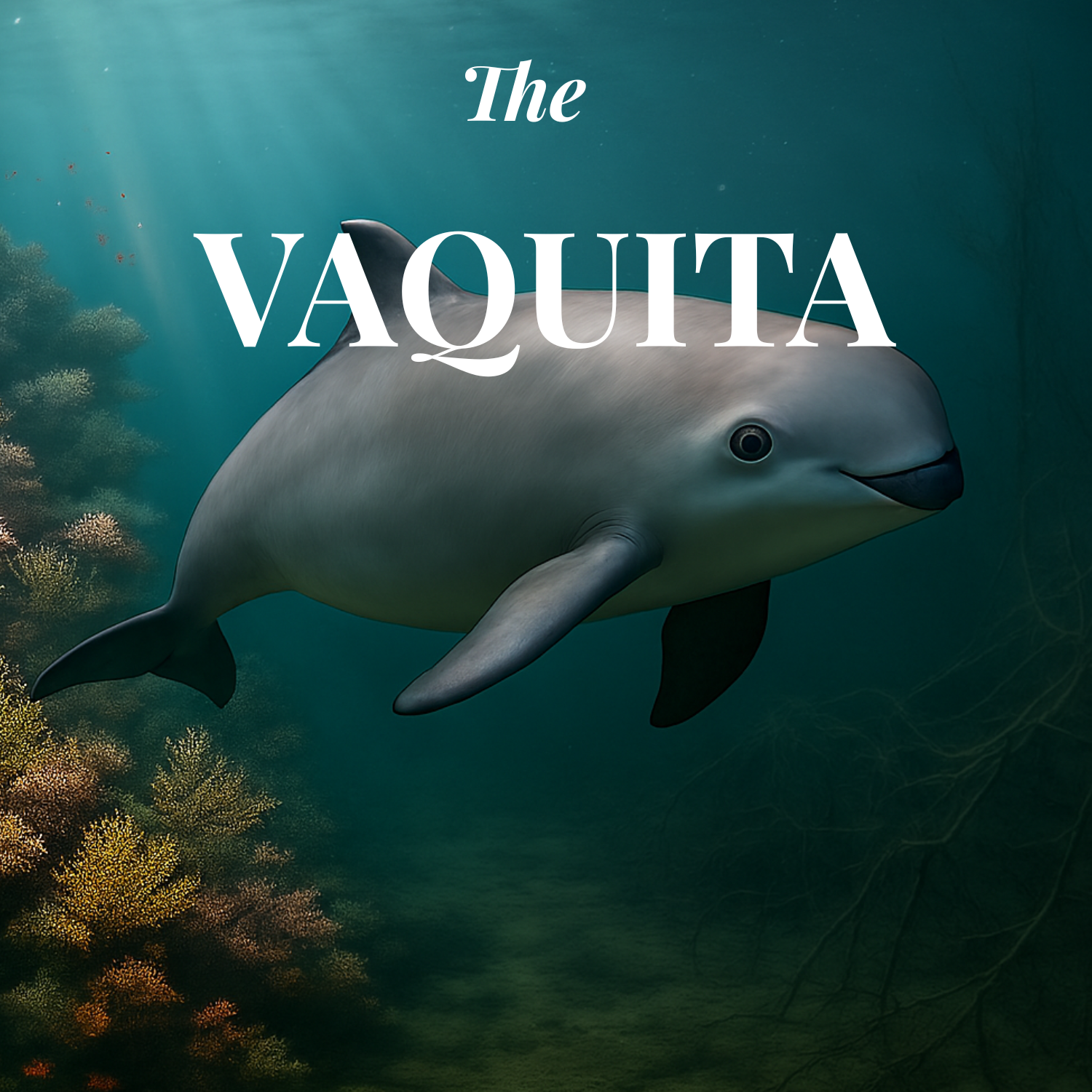
Vaquitas have a stocky, short-rectangular body with a bluntly angled head and with no distinct snout, making them different from other dolphins. The dorsal surface of the vaquita is dark grey and has a light-grey pattern towards the flank. The ventral surface is white-grey to white.
One defining characteristic of vaquitas is the dark area that encircles the eyes (known as eye patches) and a band of dark colour from the mouth ear (known as mouth markings). Their dorsal fin for the vaquita is more upright, triangular, and placed near the upper-centerline of the body, which distinguishes it from all other identified porpoise species. Vaquitas' flippers are small in appearance, rounded and are mostly dark in colour.
Vaquita morphology has developed into their own environment which is shallow coastal waters with less sunlight penetration, less clear ocean currents (tidal), and very shallow waters.
1. Bycatch in Gillnets
The primary threat to the vaquita is incidental capture in gillnets (bycatch).
-
Target species: Gillnets are primarily set for the totoaba (Totoaba macdonaldi), a large fish endemic to the same region.
-
Illegal trade: The bladder of the totoaba is highly valued in traditional Chinese medicine, creating a lucrative black market.
-
Mechanism of threat: Vaquitas are small, slow-moving, and inhabit the same shallow waters as totoaba. They become entangled in nets and cannot surface to breathe, leading to drowning.
-
Historical impact: Since the 1990s, the population has declined dramatically, with estimates showing a reduction of over 90% in the past three decades.
2. Extremely Small Population
-
The vaquita population is critically low, with the most recent surveys estimating fewer than 20 individuals.
-
Genetic consequences: Small populations face reduced genetic diversity, increasing susceptibility to inbreeding depression and limiting adaptive potential to environmental changes.
-
Demographic vulnerability: Low numbers amplify the risk that random events—such as disease outbreaks, harsh weather, or accidents—could cause extinction.
3. Restricted Geographic Range
-
Vaquitas are endemic to the northern part of the Gulf of California in Mexico, within an area of roughly 1,500 km².
-
This limited distribution makes the species highly vulnerable to localized threats:
-
Fishing activity
-
Habitat degradation
-
Pollution (including chemical runoff from coastal development)
-
-
Unlike widespread marine mammals, vaquitas cannot recolonize other areas, so local disturbances can have population-wide consequences.
4. Habitat and Environmental Pressures
-
Shallow, turbid waters of the northern Gulf of California are both essential habitat and high-risk zones, since they are prime locations for gillnet fisheries.
-
Environmental changes, such as temperature fluctuations, water pollution, and changes in prey availability, further reduce the vaquita’s survival chances.
5. Insufficient Enforcement and Socioeconomic Challenges
-
Despite laws banning gillnets and the totoaba trade, enforcement has been limited.
-
Socioeconomic dependence: Local fishers often rely on illegal fishing for income, creating conflicts between conservation and livelihoods.
-
Enforcement challenges are compounded by the high value of totoaba bladders, which incentivizes continued illegal activity.
6. Slow Reproductive Rate
-
Vaquitas have low reproductive potential, typical of cetaceans:
-
Females reach sexual maturity at ~3–6 years.
-
They give birth to a single calf every 1–2 years.
-
-
Such low fecundity cannot compensate for high mortality from bycatch, leading to rapid population declines.
Ways to Save our Vaquita:
1. Stop illegal gillnet fishing
-
The biggest threat to vaquitas is drowning in gillnets, especially those used to illegally catch totoaba.
-
Enforcing a permanent ban on gillnets in the vaquita’s habitat (the northern Gulf of California) is essential.
-
Increase patrols, monitoring, and penalties for illegal fishing.
2. Combat totoaba trafficking
-
Totoaba swim bladders are trafficked illegally for high prices.
-
Reducing international wildlife trafficking, especially through stronger enforcement and cooperation between countries, directly protects vaquitas.
3. Support vaquita-safe fishing
-
Promote and subsidize alternative fishing gear that does not entangle dolphins or porpoises.
-
Help local fishermen transition to sustainable livelihoods so conservation does not harm their communities.
4. Protect vaquita habitat
-
Maintain and enforce marine protected areas in the Gulf of California.
-
Reduce pollution and habitat degradation in the region.
5. Support conservation organizations
-
Donate to or support groups working on vaquita protection (e.g., conservation NGOs and scientific monitoring programs).
-
Share accurate information to raise public awareness.
6. International pressure & policy
-
Governments and international bodies must hold countries accountable for protecting endangered species.
-
Trade restrictions and conservation agreements can be effective tools.
7. Scientific monitoring
-
Continue non-invasive monitoring (such as acoustic monitoring) to track remaining vaquitas and guide protection efforts.