
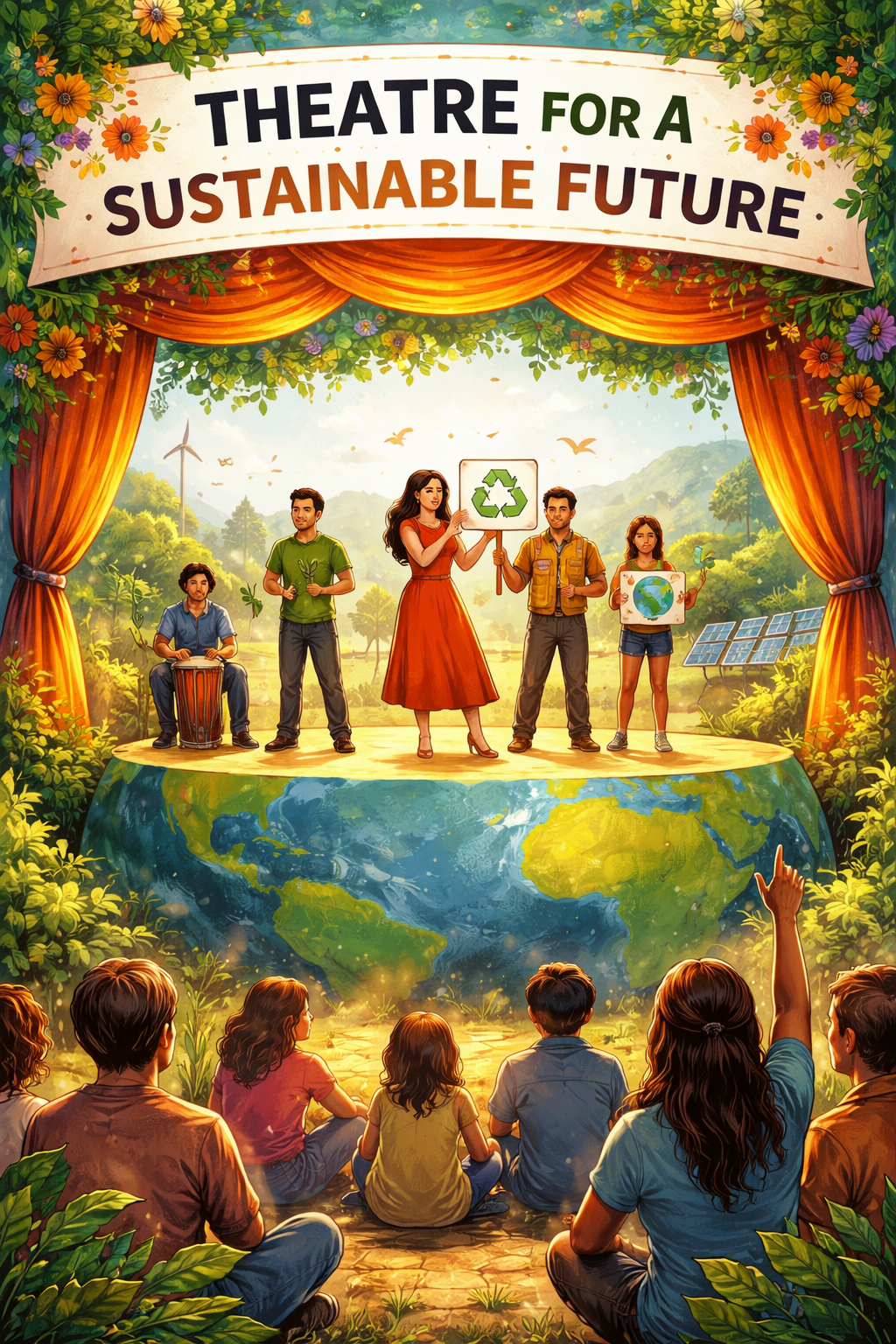
Theatre on Environmental Conservation: Performing for the Planet
Environmental conservation is a powerful and meaningful topic for theatre, as it allows artists to creatively express the urgent need to protect nature while inspiring sustainable thinking among audiences. Theatre based on environmental conservation combines art with responsibility, making it an effective medium for spreading awareness about sustainable living.
Theatre as a Sustainable Expression
Theatre presents environmental issues in a human and emotional way. Through characters, stories, and conflicts, audiences understand how deforestation, pollution, water scarcity, and climate change affect everyday life. Instead of presenting facts alone, theatre transforms these issues into lived experiences, encouraging empathy and reflection. This emotional connection makes theatre a sustainable form of expression, as the message stays in the minds of the audience long after the performance ends.
Sustainable Actions in Theatre Practice
Theatre itself can follow sustainable actions while conveying its message. Sets and props can be made from recycled or reusable materials such as cardboard, cloth, and old wood. Natural lighting or low-energy lights can be used to reduce electricity consumption. Costumes can be reused from previous productions or sourced from traditional, handmade fabrics, promoting local craftsmanship.
Performances can be staged in open spaces like parks, schools, and community areas, reducing the need for large indoor infrastructure and encouraging a closer connection with nature. Scripts can highlight practical solutions such as tree plantation, water conservation, waste segregation, and responsible consumption.
Impact on Society
Environmental theatre educates without preaching. It motivates individuals, especially young people, to take small but meaningful steps towards sustainability in their daily lives. By combining creativity with consciousness, theatre becomes a tool for long-term social change.
Conclusion
Theatre on environmental conservation proves that art can be both beautiful and responsible. When theatre adopts sustainable actions and delivers sustainable expressions, it not only entertains but also nurtures awareness, responsibility, and hope for a greener future.