
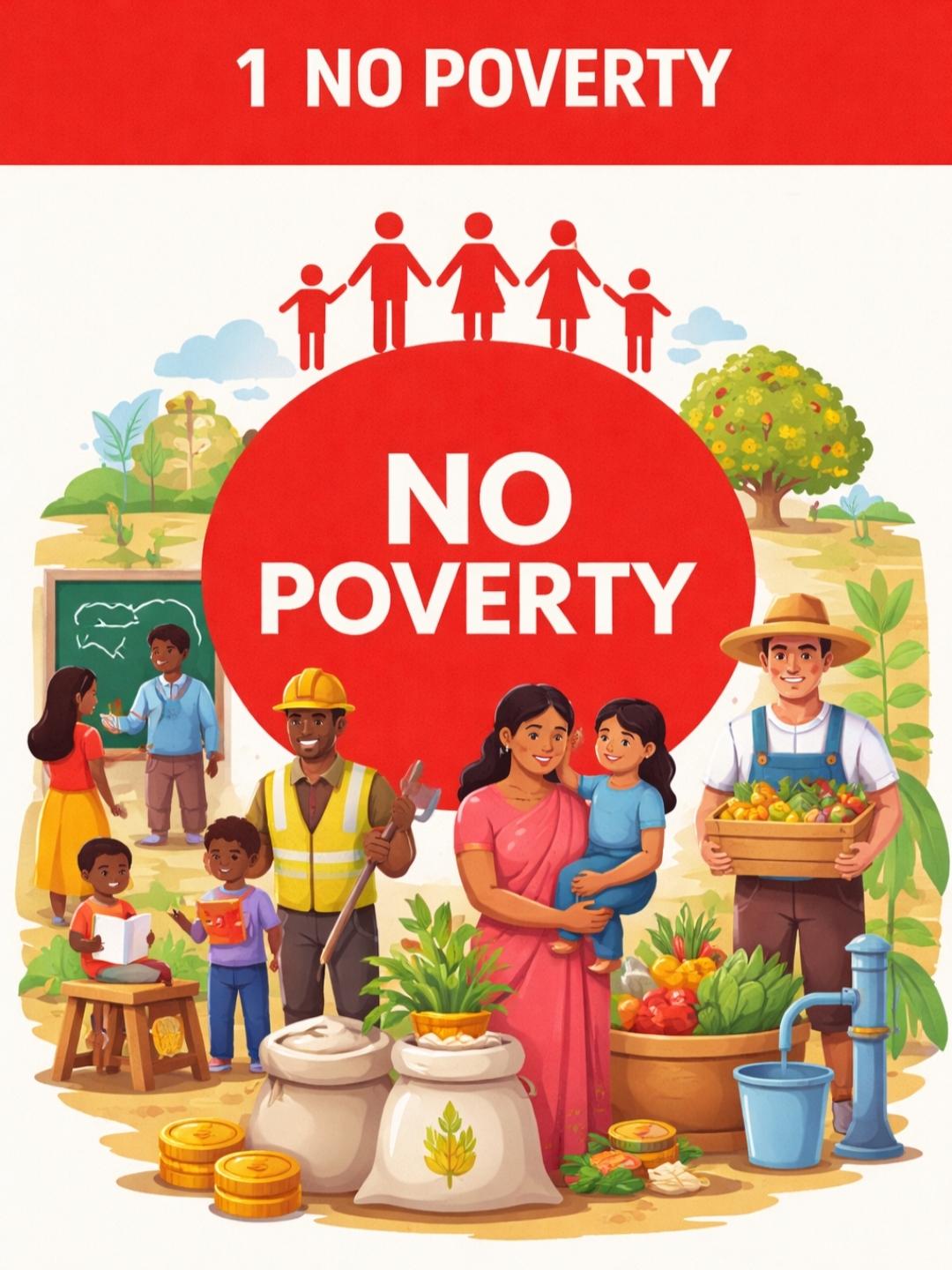
SDG 1: No Poverty – A Foundation for Sustainable Development
Poverty is one of the greatest challenges facing humanity today. It is not only the lack of income but also the denial of basic human needs such as food, shelter, education, healthcare, and dignity. Recognizing this, the United Nations included Sustainable Development Goal 1 (SDG 1): No Poverty, which aims to end poverty in all its forms everywhere by 2030. Achieving this goal is essential for building a just, inclusive, and sustainable world.
Understanding Poverty in a Sustainable Context
Poverty is multidimensional. It affects people’s access to opportunities and weakens social stability. Poor communities are often the most vulnerable to environmental degradation, climate change, and economic shocks. Therefore, eliminating poverty is closely linked with sustainable development, social justice, and environmental protection.
Sustainable Actions to Promote SDG 1
1. Inclusive Education and Skill Development
Providing quality education and vocational training helps people gain skills for decent employment. Education empowers individuals to break the cycle of poverty sustainably.
2. Employment Generation and Fair Wages
Promoting sustainable livelihoods through small businesses, local industries, and green jobs ensures stable income while protecting the environment.
3. Social Protection Systems
Government schemes such as pensions, food security programs, and health insurance protect vulnerable populations from falling into extreme poverty.
4. Support for Rural and Marginal Communities
Investing in agriculture, irrigation, self-help groups, and microfinance strengthens rural economies and reduces inequality.
5. Gender Equality and Women Empowerment
Ensuring equal access to resources, education, and employment for women significantly reduces poverty at the household and community levels.
Sustainable Expression and Perspectives on SDG 1
From a sustainable viewpoint, poverty eradication should not depend on short-term charity but on long-term empowerment. Development must be people-centered, environmentally responsible, and economically inclusive. True sustainability lies in enabling communities to become self-reliant while preserving natural resources for future generations.
As economist Amartya Sen emphasizes, development should expand human freedoms. Ending poverty is not merely an economic target but a moral responsibility that upholds human dignity and equality.
SDG 1, No Poverty, is the foundation of all other sustainable development goals. Without eliminating poverty, goals related to health, education, gender equality, and environmental protection cannot be fully achieved. Through collective efforts, responsible governance, and sustainable actions, a poverty-free world is not just an ideal but an achievable reality.