
Introduction
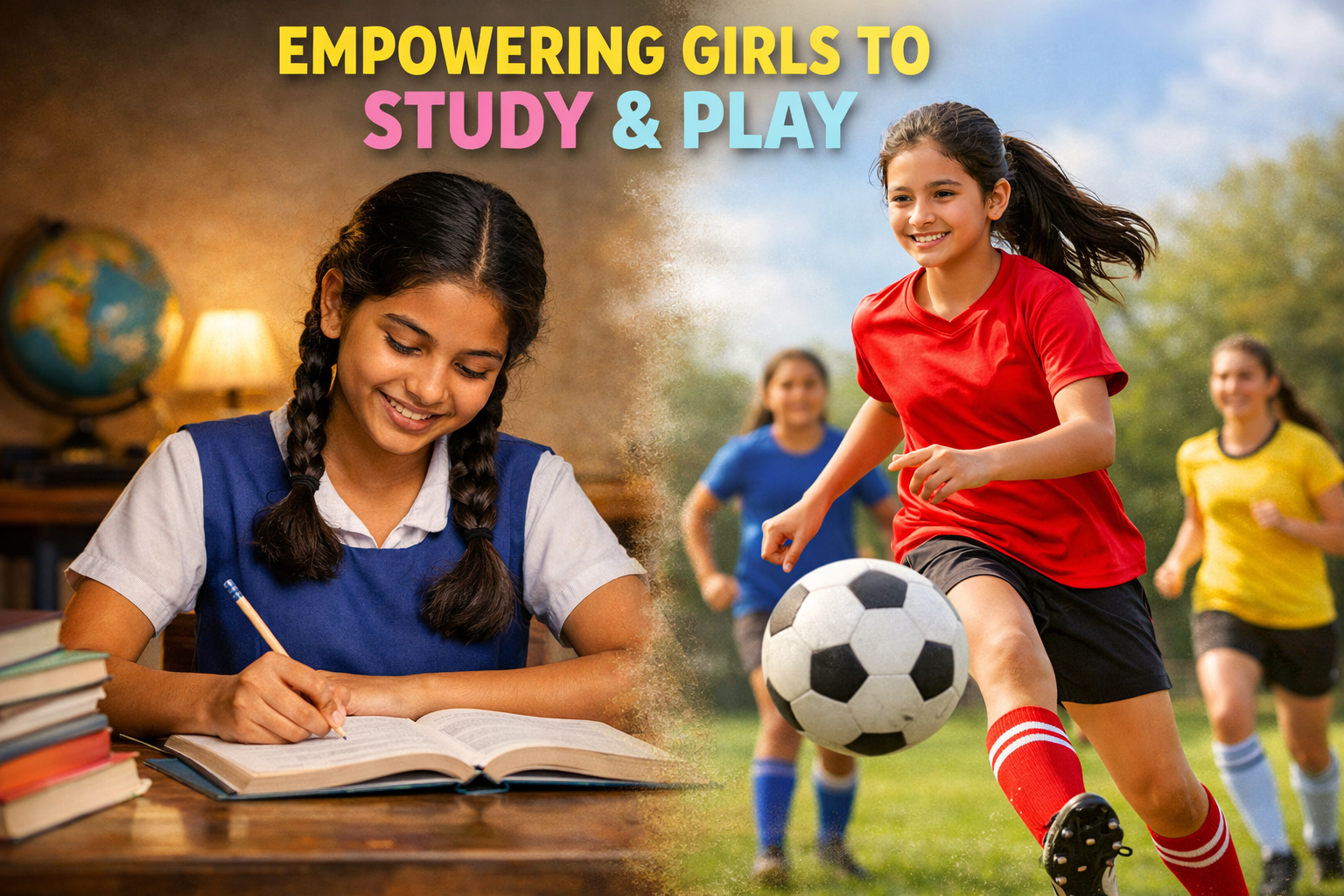
Empowering girls to study and play is one of the most important steps toward building a fair, strong, and progressive society. Education and play are not luxuries; they are basic rights of every child, regardless of gender. Yet, in many parts of the world, girls are still denied equal opportunities to learn, explore, and enjoy sports due to social traditions, poverty, lack of awareness, and gender discrimination. When girls are empowered to study and play freely, they grow into confident individuals who contribute positively to their families, communities, and nations.
Education shapes the mind, while play strengthens the body and spirit. Together, they create balanced development. A girl who studies gains knowledge and independence, and a girl who plays learns teamwork, leadership, discipline, and self-belief. Empowering girls in both these areas is essential for true gender equality.
The Importance of Educating Girls
Education as a Fundamental Right
Education is a basic human right recognized across the world. It allows individuals to develop their talents, understand their rights, and participate actively in society. For girls, education is especially powerful because it breaks the cycle of poverty and dependency.
An educated girl is more likely to:
-
Make informed decisions about her life
-
Stay healthy and raise healthy families
-
Earn a living and become financially independent
-
Support the education of her own children
When girls are educated, entire communities benefit.
Breaking the Cycle of Poverty
Many families living in poverty prioritize boys’ education over girls’. Girls are often expected to help with household chores, take care of siblings, or work at an early age. This deprives them of schooling and limits their future opportunities.
Educating girls helps break this cycle. Studies show that when girls receive quality education:
-
They marry later
-
They have fewer and healthier children
-
They earn higher incomes
-
They invest more in their families’ well-being
Thus, educating girls is not just a social issue—it is an economic solution.
Education and Confidence
Education gives girls confidence and a voice. A girl who studies learns to express her opinions, ask questions, and stand up for herself. She becomes aware of her rights and responsibilities. Education helps girls challenge harmful practices such as child marriage, gender violence, and discrimination.
Confidence gained through education enables girls to dream big and pursue careers in science, sports, medicine, engineering, arts, politics, and many other fields.
The Importance of Play and Sports for Girls
Play Is Not a Waste of Time
In many societies, play is seen as unimportant for girls. Girls are often discouraged from playing outdoor games or sports because it is considered “unfeminine” or unsafe. This mindset is harmful and outdated.
Play is essential for:
-
Physical health
-
Mental well-being
-
Emotional growth
-
Social skills
Just like boys, girls need time and space to play freely.
Physical Benefits of Sports
Sports help girls develop strong bones, muscles, and stamina. Regular physical activity reduces the risk of obesity, diabetes, heart disease, and other health problems. It also improves posture, coordination, and overall fitness.
For adolescent girls, sports help maintain hormonal balance and reduce stress. A healthy body supports a healthy mind, making it easier for girls to focus on their studies.
Mental and Emotional Benefits
Playing games and participating in sports boosts self-esteem and reduces anxiety and depression. Through play, girls learn how to handle success and failure, manage emotions, and stay positive under pressure.
Sports also teach discipline, patience, and perseverance. These qualities help girls face challenges in academics and life with courage and determination.
Social Skills and Leadership
Team sports teach girls cooperation, communication, and leadership. They learn to respect rules, support teammates, and work toward common goals. These skills are valuable not only in sports but also in classrooms, workplaces, and society.
Girls who play sports are more likely to become leaders because they are confident, bold, and decision-makers.
Challenges Faced by Girls in Education and Play
Gender Discrimination
Gender discrimination remains one of the biggest barriers to girls’ empowerment. In many families, girls are still considered less important than boys. This leads to unequal treatment in education, nutrition, healthcare, and freedom.
Girls are often told:
-
“Education is not necessary for girls”
-
“Sports are for boys”
-
“Girls should stay indoors”
Such beliefs limit girls’ potential and dreams.
Poverty and Lack of Resources
Many girls drop out of school due to poverty. Families may not afford school fees, uniforms, books, or transportation. Lack of proper sanitation facilities in schools also discourages adolescent girls from attending regularly.
Similarly, sports facilities, playgrounds, and equipment are often unavailable or reserved mainly for boys.
Safety Concerns
Safety is a major concern for parents, especially regarding girls’ mobility. Fear of harassment or violence prevents many girls from going to school, playgrounds, or sports grounds, especially in rural and urban slum areas.
Ensuring safe environments is crucial for empowering girls.
Social and Cultural Barriers
Traditional customs and social norms restrict girls’ freedom. Early marriage, household responsibilities, and rigid gender roles prevent girls from continuing education or participating in sports.
Changing mindsets is as important as building schools and playgrounds.
Role of Family in Empowering Girls
Supportive Parents
Parents play a key role in shaping a girl’s future. When parents encourage their daughters to study and play, girls feel valued and motivated.
Parents should:
-
Treat sons and daughters equally
-
Encourage girls’ education
-
Allow girls to play and participate in sports
-
Support their dreams and ambitions
A supportive family creates a strong foundation for empowerment.
Educated Mothers as Role Models
Educated mothers understand the value of education and play. They inspire their daughters to study, stay confident, and aim high. Mothers who encourage physical activity help their daughters develop healthy habits from an early age.
Role of Schools and Teachers
Schools are powerful spaces for empowerment. Teachers must create inclusive environments where girls feel safe, respected, and encouraged.
Schools should:
-
Promote girls’ education equally
-
Provide sports facilities for girls
-
Encourage girls to participate in competitions
-
Address gender bias
Female teachers and coaches also serve as role models for young girls.
Role of Government and Society
Governments play a vital role by:
-
Making education free and compulsory
-
Providing scholarships for girls
-
Building schools and playgrounds
-
Running awareness campaigns
-
Ensuring safety and legal protection
Society must work together to challenge stereotypes and promote gender equality.
Successful Examples of Empowered Girls
Across the world, many girls have broken barriers through education and sports. From scientists and doctors to athletes and leaders, empowered girls prove that given the right opportunities, they can achieve anything.
Girls like athletes, astronauts, educators, and innovators inspire millions and show that gender should never limit potential.
Conclusion
Empowering girls to study and play is not just about fairness—it is about building a better future for everyone. Education gives girls knowledge and independence, while play gives them strength, confidence, and joy. Together, they shape well-rounded individuals capable of transforming society.
When girls are empowered, families grow stronger, communities prosper, and nations progress. It is the responsibility of parents, schools, governments, and society to ensure that every girl gets the chance to learn, play, and shine.
An empowered girl is not just a success story—she is the foundation of a powerful tomorrow.