
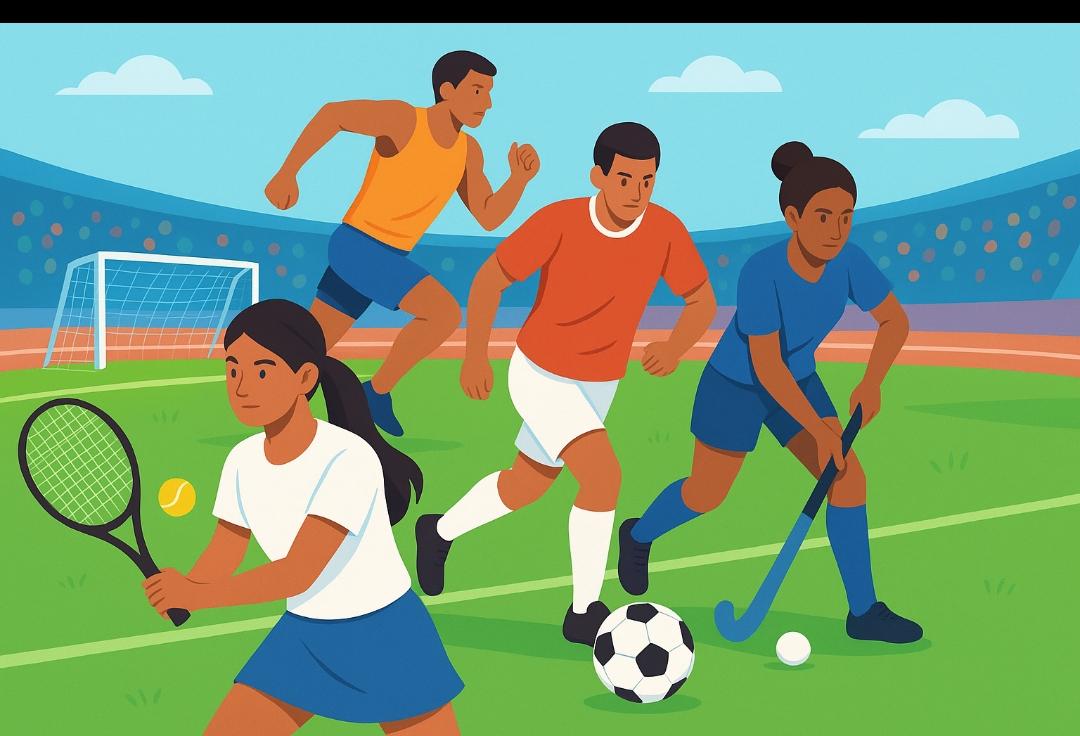
Sports have always been an essential part of human civilisation, shaping societies, cultures, and individuals in numerous powerful ways. From the earliest forms of physical competition in ancient Greece, where the Olympic Games originated, to the modern era of international sports tournaments watched by millions across the world, sports continue to hold immense importance in the lives of people of all ages. At its core, sports are not just about winning or losing; they are about learning discipline, building character, improving physical fitness, and creating unity among people. In today’s world, where technology occupies a huge part of our daily lives, sports play a vital role in helping individuals maintain a healthy lifestyle, stay energetic, and develop emotional and mental strength. Sports also offer a constructive outlet for stress and anxiety, providing young people, especially students, with a positive distraction that improves their focus and confidence.
One of the biggest values sports teach us is discipline. No athlete becomes great overnight; they reach excellence through consistent practice, dedication, and patience. When a sportsperson wakes up early in the morning to train, follows strict routines, and overcomes physical and mental challenges every day, they learn one of the most important life lessons: discipline leads to success. Whether it is cricket, football, athletics, badminton, or swimming, every sport requires continuous effort to improve. This valuable lesson is not limited to the sports field; it also helps individuals succeed in studies, future careers, and personal life. Sports teach us that no matter how talented someone is, without hard work and commitment, success remains incomplete.
Another powerful aspect of sports is that they teach teamwork and cooperation. In team sports like cricket, football, hockey, and basketball, players must learn to trust one another, communicate effectively, and work with unity to achieve a common goal. When a team plays with coordination, they can overcome even stronger opponents. Individual talents matter, but team spirit strengthens a group and brings victory. This lesson is useful in real life as well, because in school, workplaces, families, and society, teamwork is required to solve problems and build harmony. Sports teach us that when people come together with shared purpose, success becomes more meaningful and enjoyable.
Sports also contribute to physical fitness and overall health, which is extremely important in today’s lifestyle where many people spend long hours sitting in front of screens. Playing sports improves body strength, flexibility, stamina, and immunity. It reduces the risk of diseases such as obesity, diabetes, and heart problems. Regular physical activity helps improve concentration and memory, making students perform better in academics. Studies show that children who play sports regularly are more active, positive, and emotionally stable. Outdoor games help develop strong muscles and bones, while indoor sports sharpen coordination, focus, and reflexes. Thus, sports are not just entertainment—they are a pathway to a healthier life.
Sports also play a major role in building confidence and leadership qualities. When players participate in competitions, they learn how to handle pressure, accept challenges, and overcome fear. Winning gives joy and boosts self-esteem, while losing teaches humility and resilience. Sports teach us that failure is not the end, but a chance to improve and come back stronger. Many great athletes in the world, including Indian legends like Sachin Tendulkar, P.V. Sindhu, Neeraj Chopra, and Mary Kom, have faced failures before becoming champions. Their journeys inspire millions to never give up and keep striving for excellence. Sports help individuals believe in their abilities and understand that every achievement begins with courage and effort.
In addition to personal benefits, sports bring unity and national pride. When athletes represent their country on international platforms, they become symbols of hope, strength, and inspiration. The entire nation celebrates their victories and supports them during challenges. Events like the Olympics, Commonwealth Games, Asian Games, and World Cups bring people together regardless of religion, caste, language, or region. Sports have the power to break barriers and create harmony among different communities. For example, in India, cricket is not just a sport but an emotion that brings millions together to cheer for the team.
Sports also promote fairness, equality, and respect. The spirit of sportsmanship teaches players to respect rules, opponents, and officials. Whether someone wins or loses, what matters most is honesty, integrity, and good behaviour. When players shake hands before and after a match, they show respect and gratitude, proving that sports are bigger than rivalry. This value is essential for building peaceful societies where disagreements are handled with maturity and fairness.
Moreover, sports open doors to future careers. Today, sports offer opportunities in fields like professional athletics, coaching, sports medicine, sports journalism, fitness training, sports management, and physiotherapy. Many young people dream of representing India internationally or working in sports-related fields. With government support and improved infrastructure, India is producing world-class athletes and promoting sports in schools and colleges. This encourages students to follow their passion and build successful careers through sports.
In conclusion, sports are not just physical activities—they are powerful tools that shape minds, bodies, and societies. They teach discipline, teamwork, confidence, leadership, and resilience. They promote health, unity, and national pride. Sports inspire individuals to dream big and work hard, reminding us that success comes to those who face challenges with determination. Whether played for fun, fitness, or profession, sports add meaning, joy, and strength to life. In a world full of distractions, sports help us stay grounded, active, and motivated. This is why sports are an essential part of education and human development, and everyone—young or old—should include sports in their everyday life.