
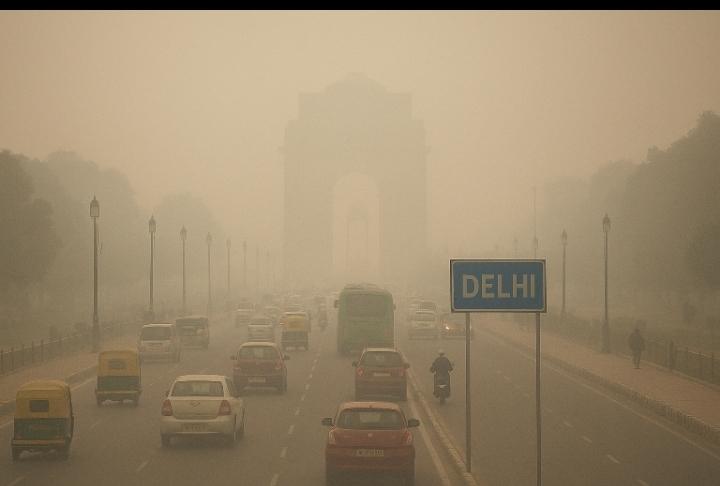
The Air Quality Index (AQI) is a measure that tells us how clean or polluted the air is, and what health effects we might face if we breathe it. In many cities, especially places like Delhi, the AQI often reaches the “poor,” “very poor,” or even “severe” category, mainly due to vehicle emissions, industrial smoke, construction dust, and the burning of waste and crop stubble. During winter, low temperatures and slow winds trap pollutants close to the ground, making the air thick, hazy, and harmful. Poor air quality affects everyone, but children, older people, and those with asthma and lung problems suffer the most. It can cause coughing, breathing difficulty, eye irritation, headaches, and long-term heart and lung diseases. To improve air quality and reduce the AQI level, both the government and citizens must work together. The government should strictly control industrial pollution, promote cleaner fuels, improve public transport, and ensure that construction sites follow dust-control rules. They should also provide better waste-management systems to stop garbage burning and help farmers adopt eco-friendly methods instead of burning crop stubble. At the same time, people must take simple but powerful steps in their daily lives. Using public transport, carpooling, cycling, and walking can reduce the number of vehicles on the road. Planting more trees around homes, schools, and public places helps absorb pollutants and release clean oxygen. Avoiding firecrackers, managing household waste properly, and maintaining vehicles so they emit less smoke can also make a big difference. Schools can create awareness among students, and communities can participate in cleanliness drives and tree-plantation activities. Improving air quality is not the job of one person or one department; it requires collective effort, responsibility, and awareness. If we all take small steps consistently, we can reduce pollution, improve AQI levels, and create a healthier, cleaner, and safer environment for everyone.