
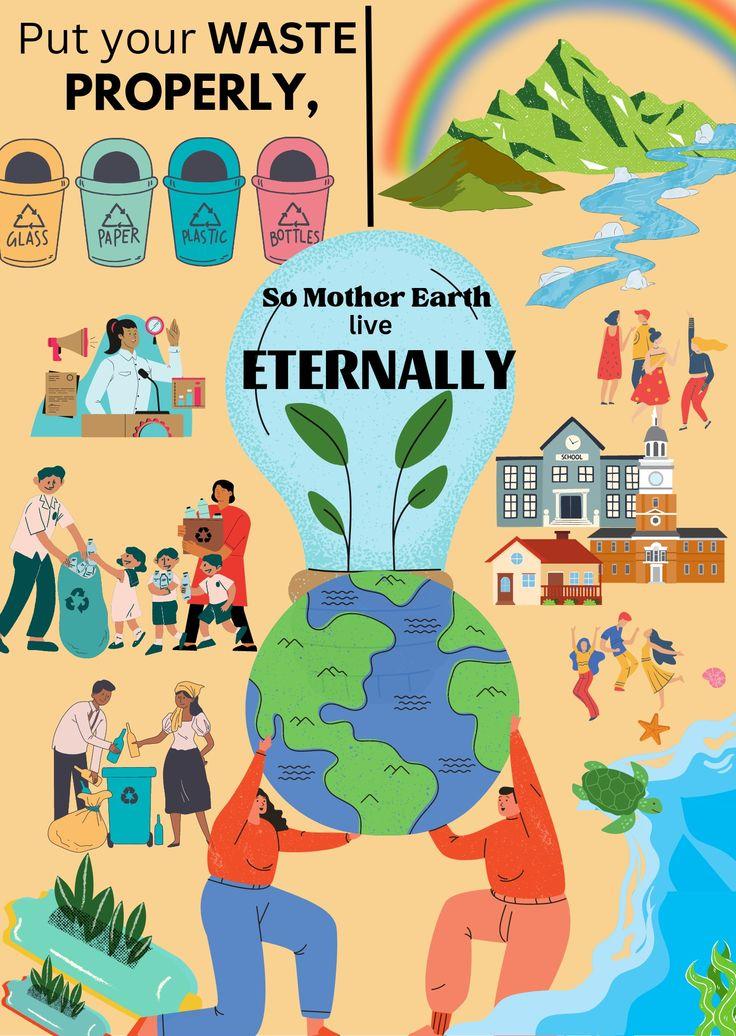
How Much Waste Does India Produce Daily?
•India generates around 160,000 tonnes of municipal solid waste every day.
•Equal to 40,000+ truckloads of garbage daily.
Why Does India Produce So Much Waste?
•Large population + rapid urbanisation.
•More packaged and plastic products.
•Increased consumption due to rising income.
•Poor segregation habits at home.
•Lack of awareness about recycling.
Where Does All This Waste Go?
•Recycling centres/MRFs: Where dry waste is sorted.
•Composting plants: For wet and organic waste.
•Landfills/dumpsites: Still used heavily, often overloaded.
•Waste-to-energy plants: Convert some waste to electricity.
•Open dumping/burning: Happens in many areas and causes pollution.
What the Government Is Doing to Reduce Waste?
•Swachh Bharat Mission: Better waste collection and cleanliness.
•Single-use plastic bans: Reduce plastic pollution.
•Building composting and recycling plants.
•Biomining: Cleaning old dumps and landfills.
•Waste-to-energy projects: To handle non-recyclable waste.
•Awareness campaigns: For segregation and cleanliness.
Mistakes People Commonly Make
•Mixing all waste in one bin.
•Throwing garbage on roads or empty plots.
•Using too much single-use plastic.
•Burning waste at home.
•Not cleaning recyclables before throwing.
Mistakes Governments/Authorities Make
•Weak enforcement of segregation rules.
•Delay in creating scientific landfills.
•Poor monitoring of waste collection trucks.
•Slow progress in recycling infrastructure.
•Limited awareness programs.
How Long Different Waste Items Take to Decompose?
•Banana peel: 2–5 weeks
•Paper: 2–6 weeks
•Cardboard: 2 months
•Cotton cloth: 1–5 months
•Cigarette butts: 10–12 years
•Plastic bags: 20–30 years
•Aluminium cans: 80–200 years
•Plastic bottles: ~450 years
•Glass: Nearly 1 million years
What Other Countries Do That India Can Learn From?
Countries With Excellent Waste Management
•Japan: Very strict segregation (10–12 categories).
•Sweden: Recycles almost everything; waste-to-energy efficient.
•Germany: Best recycling system with colour-coded bins.
•South Korea: Pay-as-you-throw reduces waste generation.
What They Avoid?
•No mixing of waste.
•No open dumping.
•Very low use of single-use plastics.
•Strict fines for rule breakers.
What People Can Do to Help?
•Use 3 bins: Wet, Dry, Hazardous.
•Compost kitchen waste.
•Reduce plastic use; choose reusable items.
•Clean recyclables before discarding.
•Support local cleanup drives.
Final Message
India’s waste problem is huge — but government action + responsible citizens can deeply reduce pollution. Small daily habits bring big change!