
A Scientific Secret: Unlocking the Blue Sky Mystery
Have you ever looked up at a bright blue sky and wondered, "Why is it blue and not, say, green or purple?" It seems like a simple question, but the answer is actually a cool bit of science involving sunlight and tiny bits of our atmosphere!
Sunlight's Secret Colors
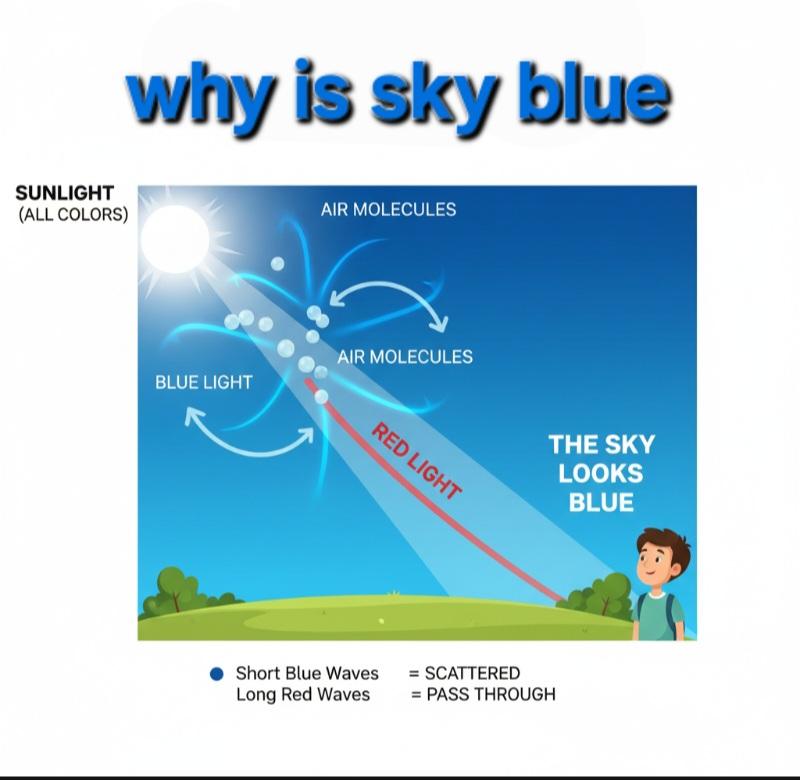
First, let's talk about sunlight. When you see white light from the sun, it might look like one plain color, but it’s actually made up of all the colors of the rainbow! Think about what happens when light goes through a prism or when you see a rainbow after it rains – the light splits into red, orange, yellow, green, blue, indigo, and violet. Blue and violet light have shorter, "wavier" waves compared to red and orange light.Our Amazing Atmosphere
Now, imagine sunlight traveling through Earth’s atmosphere. Our atmosphere is full of tiny, tiny bits of stuff like air molecules (oxygen and nitrogen). When sunlight hits these tiny molecules, the light gets scattered, like bouncing off bumper cars.
Here's the trick: the shorter, wavier colors (like blue and violet) get scattered much more by these tiny air molecules than the longer, red and orange waves. This means that when the sun is high in the sky, the blue light is bounced all over the place, making the whole sky look blue to our eyes. Most of the other colors just pass straight through to us.
Conclusion: A Blue Surprise from Light!
So, the next time you marvel at a blue sky, you'll know it's not painted that color. It's all thanks to sunlight splitting into colors and the tiny molecules in our atmosphere acting like billions of little ping-pong paddles, bouncing blue light everywhere! Pretty cool, right?