
Introduction
Smallpox was one of the deadliest diseases in history. Caused by the variola virus, it spread easily through coughing, sneezing, or direct contact. For centuries, it caused high fevers, painful rashes, and deep scars, killing about 30% of those infected. Survivors were often left blind or badly scarred.
A Long History of Suffering
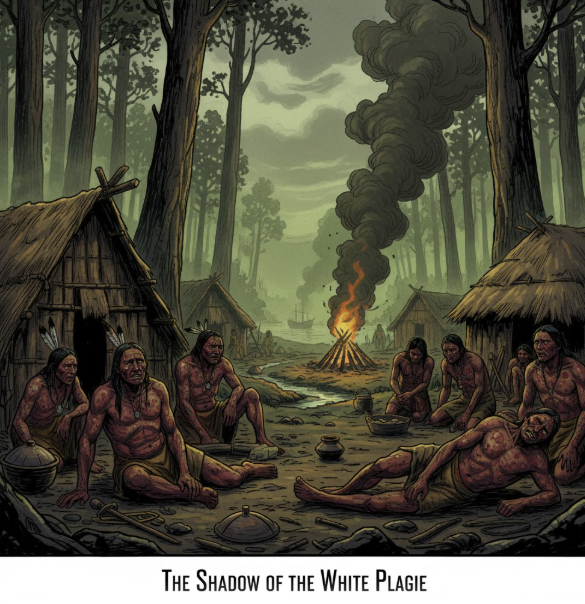
Smallpox existed for thousands of years. Evidence of it has been found in ancient Egyptian mummies, and it spread across Asia, Africa, and Europe, causing endless epidemics. When Europeans brought the disease to the Americas in the 1500s, Indigenous peoples — who had no immunity — were devastated. It became one of the deadliest impacts of colonization.
Early Protection: Variolation and Vaccination
Before vaccines, some people used variolation, a risky method that involved infecting a healthy person with material from a smallpox sore. This often provided protection but sometimes caused severe illness.
The real breakthrough came in 1796, when Edward Jenner discovered that infection with cowpox, a milder disease, protected against smallpox. His work led to the world’s first vaccine, and vaccination gradually began to replace variolation.
The Eradication Campaign
By the mid-1900s, smallpox was still spreading in parts of Africa, Asia, and South America. In 1959, the World Health Organization (WHO) began a global eradication campaign. Health workers traveled to remote villages, vaccinating millions of people and tracking every new case.
The last natural smallpox case occurred in Somalia in 1977, and in 1980, the WHO officially declared smallpox eradicated — the first and only human disease ever completely eliminated.
Legacy
The eradication of smallpox remains one of the greatest achievements in medical history. It showed that science, cooperation, and vaccination can conquer even the most dangerous diseases. Today, smallpox exists only in two secure laboratories — one in the U.S. and one in Russia — kept for research.
Because of the lessons learned from smallpox, humanity is better prepared to fight future outbreaks and pandemics.