
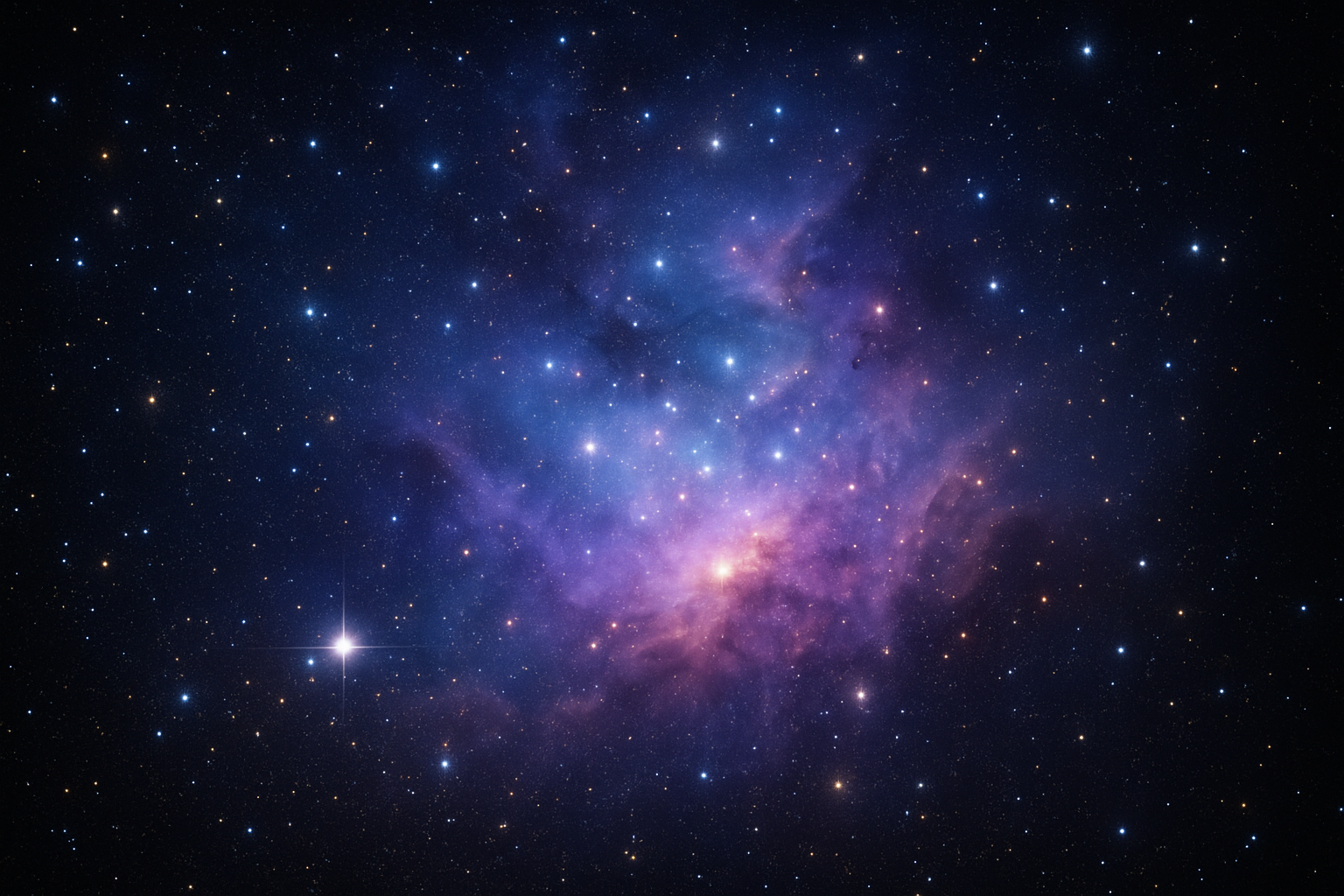
Space is an endless, mysterious world beyond our planet. It stretches in every direction, filled with stars, planets, moons, asteroids, and galaxies. Scientists call it the “final frontier” because there is still so much we don’t know. Space has no air, no sound, and no boundaries—just infinite darkness sprinkled with light from billions of stars.
Our Earth is part of a solar system that orbits the Sun. The Sun provides light and heat, making life possible. Beyond our solar system, there are countless others, each with its own planets and mysteries. Galaxies, such as our Milky Way, are like massive neighborhoods in space—each containing millions or even billions of stars.
Space exploration began when humans launched satellites and rockets. In 1969, Neil Armstrong became the first person to walk on the Moon, marking a historic step for humankind. Today, scientists use telescopes like the James Webb Space Telescope to observe distant galaxies, black holes, and nebulae. Astronauts live and work in the International Space Station, conducting experiments to help us understand how humans can survive in space for long periods.
The study of space also helps us understand Earth better.Space inspires us to ask big questions—how did the universe begin, and are we alone?