
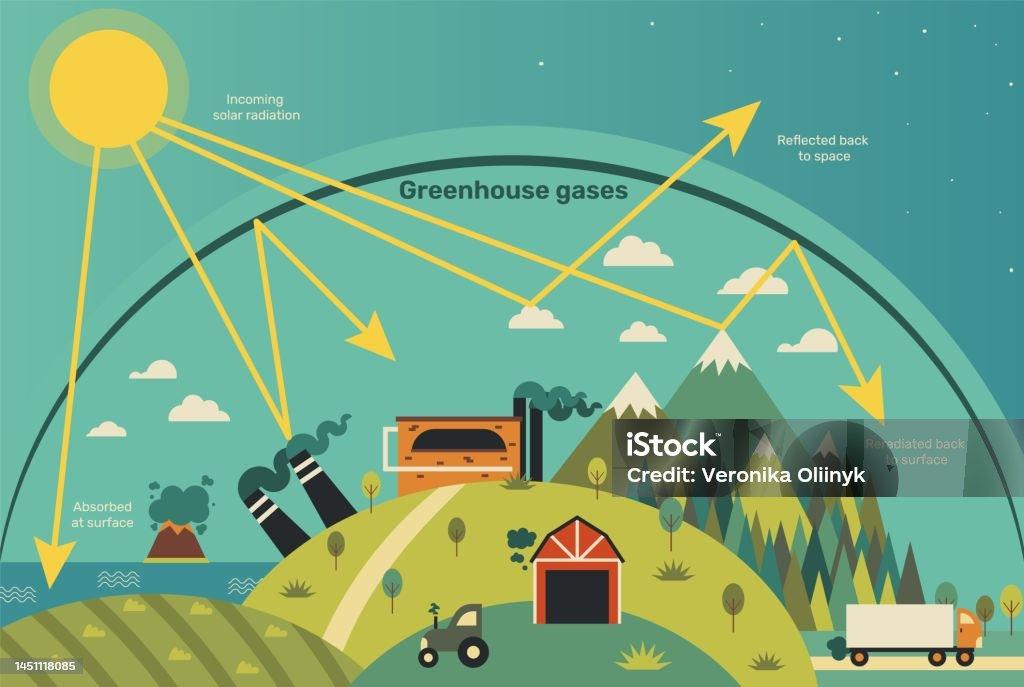
Greenhouse gases (GHGs) are
atmospheric gases that absorb and emit infrared radiation, trapping heat within the atmosphere and causing the greenhouse effect [1, 2]. This natural process keeps the Earth warm enough to support life, but human activities have significantly increased the concentrations of certain GHGs, leading to enhanced warming and climate change [1, 2, 3]. Key greenhouse gases include:
- Carbon Dioxide ( ): The primary driver of human-caused climate change, largely from burning fossil fuels like coal, oil, and natural gas [1, 2].CO2cap C cap O sub 2𝐶𝑂2
- Methane ( ): A powerful GHG produced by natural sources and human activities such as livestock farming, landfills, and natural gas leaks [1, 2].CH4cap C cap H sub 4𝐶𝐻4
- Nitrous Oxide ( ): Emitted during agricultural and industrial activities, as well as the combustion of fossil fuels and solid waste [1, 2].N2Ocap N sub 2 cap O𝑁2𝑂
- Fluorinated Gases (F-gases): Synthetic, powerful GHGs used in various industrial processes and products (e.g., refrigerants), which can remain in the atmosphere for centuries [1, 2].
