
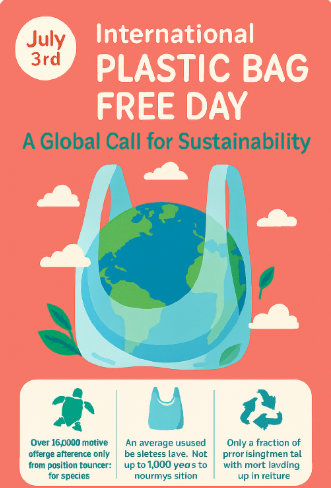
Every year on July 3rd, the world comes together to observe International Plastic Bag Free Day, a movement that urges individuals, communities, and governments to rethink their reliance on single-use plastic bags and embrace eco-friendly alternatives
🛍️ Why It Matters
Plastic bags, though convenient, are a major environmental hazard:
-
Marine Pollution: Millions end up in oceans, harming marine life through ingestion and entanglement.
-
Land Pollution: They clog drainage systems and degrade soil quality.
-
Resource Waste: Made from fossil fuels, their production and disposal contribute to greenhouse gas emissions.
A single plastic bag can take up to 1,000 years to decompose—a sobering reminder of the long-term damage caused by short-term convenience.
🧵 Stories of Change: The Yellow Bag Foundation
In Madurai, India, the Yellow Bag Foundation is leading a grassroots revolution. Founded by Krishnan Subramanian and R.G. Gowri, the NGO empowers women from low-income communities by training them to produce sturdy, reusable cotton bags. Over 500 women have benefited from skill development programs, gaining financial independence while contributing to a plastic-free society.
One such story is of B. Keerthana, a mother of two who now earns a stable income as a tailoring instructor. “I never thought I could earn a living by my own two hands,” she says, beaming with pride.
🌱 How You Can Participate
-
Bring Your Own Bag: Use cloth, jute, or biodegradable bags when shopping.
-
Spread Awareness: Share facts and stories on social media.
-
Organize Clean-Ups: Help remove plastic waste from your community.
-
Support Local Initiatives: Buy from organizations promoting sustainable alternatives.
🌐 A Movement with Global Roots
Started in 2008 by Rezero in Spain, the day has grown into a global campaign under the Break Free from Plastic Movement, with over 1,500 organizations advocating for change. Countries like Bangladesh and India have taken bold steps by banning single-use plastic bags.