


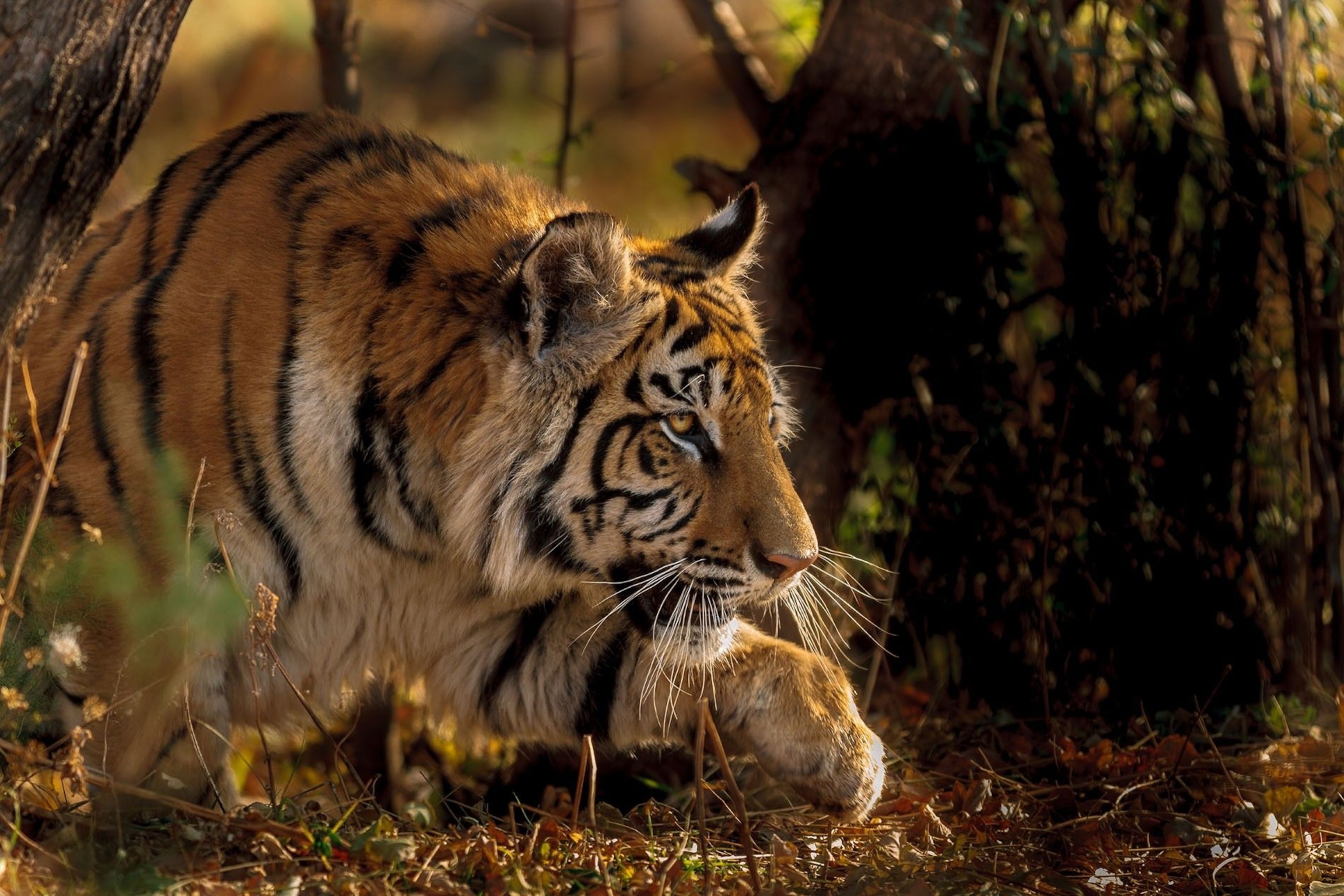
A Majestic Legacy
India’s forests are home to the sublime Bengal Tiger (Panthera tigris tigris), the grandest among its feline kin—hence often dubbed the Royal Bengal Tiger. Gracing a coat of fiery orange stripes and boasting bodies stretching up to 3 metres long and weighing as much as 280 kilograms, these majestic creatures rule their terrain with quiet strength and nobility.
Once roaming across the Indian subcontinent since the Late Pleistocene, these tigers now tread more cautiously through 19 diverse states—embracing grasslands, mangroves, tropical forests, sholas, and even Himalayan foothills .
In Numbers and Conservation
India proudly shelters over 70% of the world’s wild tigers . According to recent estimates, the wild population has risen to around 3,680 individuals—a tribute to decades of dedicated conservation efforts
These vibrancy and numbers are fruits of Project Tiger, launched in 1973, and overseen by the National Tiger Conservation Authority (NTCA) established in 2005. Together, they sustain a network of 58 tiger reserves across India, shielding these regal beasts and the landscapes that nurture them
Landscapes and Hotspots of Majesty
The heart of India’s tiger population beats strongest in Central India, especially across Madhya Pradesh and Maharashtra, where over 1,100 tigers thrive. Other critical habitats include the Western Ghats, Shivalik-Gangetic Plains, Eastern Ghats, North-East Hills, and the mystical Sunderbans .
State-wise sanctuaries tell their own stories:
-
Madhya Pradesh leads with 526 tigers.
-
Karnataka follows with 524.
-
Uttarakhand and Maharashtra too hold substantial numbers .
In addition, famed reserves like Bandhavgarh, Kanha, Ranthambore, and Pench are not just havens but legends of their own, enchanting travellers and nourishing local ecosystems .
Conservation: The True Symphony of Survival
Conservation in India is more than protection—it is a living, breathing ballad of collaboration:
-
Habitat connectivity and corridors guard against isolation and help tiger dispersal .In Madhya Pradesh, authorities now focus not just on counts but on where tigers flourish—consolidating landscapes, embracing technology, and weaving harmony between people and wildlife .
-
Cubs born within human care, such as the six tiger cubs born to tigress Aditi in Delhi Zoo, carry with them wild heritage and hopes for future rewildife .
-
Yet, challenges endure: from poaching, human-wildlife conflict, and habitat fragmentation, to the pressures of development—reminding us the path of guardianship must ever remain vigilant .
A Cultural and Natural Emblem
In India, more than a creature, the tiger is a symbol of tradition, power, and the wild soul of the land. Its image is woven into folklore, sanctuaries, and chants—an enduring emblem of the past, speaking of nature’s glory and our responsibility to preserve it for generations yet to come.
In Closing
In these forests, amid rustling leaves and mist-kissed dawns, the Bengal Tiger strides like a poem—melancholic yet hopeful. Each tiger seen or saved, each cub’s cry, each sanctuary protected, speaks not just of survival, but of reverence: for the wild, for heritage, and for the future.