
Introduction
India’s cultural heritage is incredibly rich, and its classical dance forms are among the most beautiful expressions of that heritage. These dances combine graceful movements, intricate hand gestures, facial expressions, and storytelling to convey emotions and spiritual themes. Recognized by the Sangeet Natak Akademi, the 9 official classical dance forms of India each have a unique history, style, and cultural background.
1. Bharatanatyam – Tamil Nadu
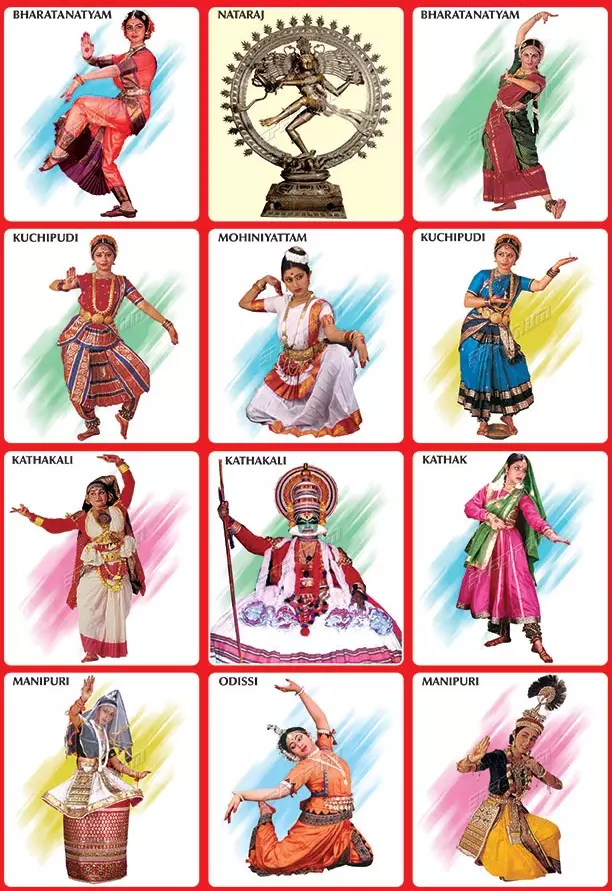
Bharatanatyam is one of the oldest dance forms in India, originating in the temples of Tamil Nadu. It is known for its fixed upper torso, bent legs, intricate footwork, and expressive gestures (mudras). The dance often narrates stories from Hindu epics like the Ramayana and Mahabharata.
2. Kathak – North India
Kathak developed in the courts of North India and is known for its graceful spins, rhythmic footwork, and expressive storytelling. The word “Kathak” comes from “Katha,” meaning story, and dancers traditionally narrate tales from ancient scriptures through movement and expressions.
3. Kathakali – Kerala
Kathakali is a vibrant dance-drama from Kerala, famous for its elaborate costumes, colorful makeup, and dramatic storytelling. Performances are often based on themes from Hindu epics, with dancers using exaggerated facial expressions and powerful body movements.
4. Kuchipudi – Andhra Pradesh
Kuchipudi combines fast rhythms with graceful movements. Originating from Andhra Pradesh, it was traditionally performed by male dancers but is now performed by both men and women. It often includes spoken dialogues along with dance.
5. Manipuri – Manipur
Manipuri dance is gentle, graceful, and devotional, often portraying scenes from the life of Lord Krishna and Radha. The costumes are elegant, with women wearing a cylindrical skirt called the “potloi.”
6. Mohiniyattam – Kerala
Mohiniyattam, meaning “dance of the enchantress,” is a graceful solo dance performed by women. It is characterized by gentle, swaying movements and soft expressions, often depicting themes of love and devotion.
7. Odissi – Odisha
Odissi is one of the oldest surviving dance forms, originating from the temples of Odisha. It is known for its sculpturesque poses, fluid torso movements, and depiction of stories of Lord Jagannath, Krishna, and Vishnu.
8. Sattriya – Assam
Sattriya was originally a dance performed by monks in monasteries (Satras) of Assam as a form of devotion. Over time, it evolved into a classical art form with intricate hand gestures, rhythmic footwork, and spiritual storytelling.
9. Chhau – Eastern India (Odisha, West Bengal, Jharkhand)
Chhau is a semi-classical dance that combines martial arts, folk traditions, and storytelling. Dancers often wear masks, and the performances depict tales from epics, nature, and folklore.
Conclusion
Each of these nine dance forms is more than just movement—it is a living tradition passed down through generations. They are treasures of India’s heritage, blending art, history, and spirituality. By learning about and supporting these dances, we help preserve the country’s cultural legacy for the future.