
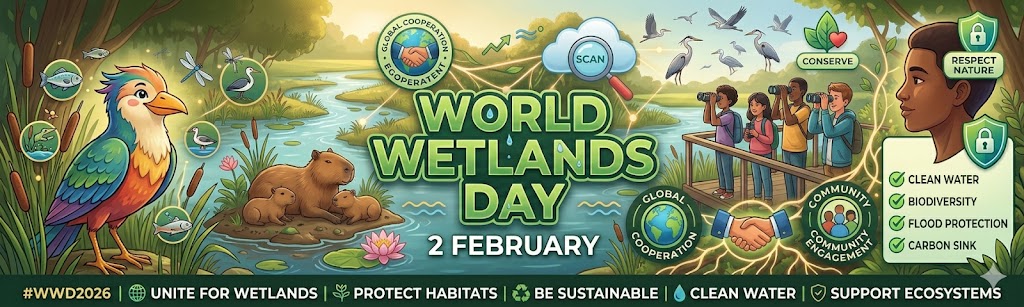
Observed on 2 February, World Wetlands Day raises global awareness about the critical importance of wetlands ecosystems like marshes, lakes, rivers, and mangroves that serve as the planet's "natural sponges." These lifelines act as water filters, flood protectors, and essential carbon sinks for climate regulation. Despite their value, wetlands are disappearing three times faster than forests due to urbanization and pollution.
At GoSharpener, this day is an opportunity to help students uncover the value of these often-overlooked ecosystems and transform them into active environmental advocates.
GoSharpener Activity: Wetlands & Wildlife Awareness
In observation of World Wetlands Day 2026, GoSharpener students participated in the "Wetlands & Wildlife Awareness" challenge. This immersive activity included:
- Ecosystem Research: Developing posters and research presentations on how wetlands support diverse species of birds, fish, and wildlife.
- Conservation Advocacy: Creating short videos to propose simple solutions for reducing water pollution and protecting local water bodies.
- Impact Mapping: Connecting classroom knowledge with real-world environmental challenges to understand human impact on nature.
All participation was documented in student Impact Profiles, boosting their SustainabilityScores under SDG 13: Climate Action and SDG 14: Life Below Water, reflecting their commitment to preserving Earth's biodiversity.
How GoSharpener Creates Impact Differently
GoSharpener redefines environmental education through action-oriented learning. As India’s leading personal sustainability score platform for Gen Z, it moves beyond theory by encouraging students to research, create, and share their findings within a purposeful community.
Just as academic grades track learning, the SustainabilityScore serves as a digital scorecard for a student's real-world contributions to the planet. By aligning local conservation efforts with global Sustainable Development Goals (SDGs), GoSharpener ensures that students see how their small habits contribute to a larger mission. We are inspiring a generation that doesn't just study nature but actively safeguards it for future generations.